This post is also available in:
Zaidi Sadat
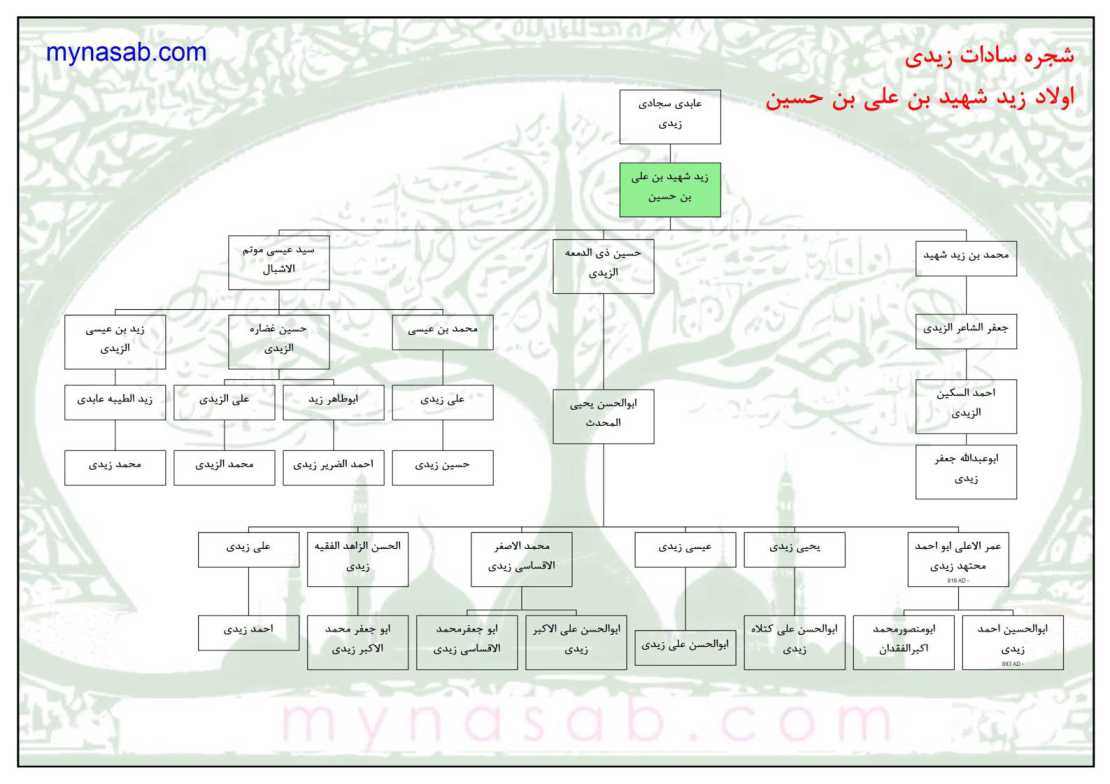
The lineage of Sadat Zaidi goes directly to Imam Hussein. Zaidi Ul Wasti are the descendants of Zayd bin Ali bin Hussein who migrated from the Wasit region of Iraq to Iran (Greater Iran, which included countries such as Tajikistan, Turkmenistan, etc.) and India.
Sadat Zaidi were one of the most prominent dynasties of the Indian subcontinent and in many eras played an important role in appointing or overthrowing the kings of India.
‘‘ martyred in Kufa, Iraq. Many of his children were martyred, the remaining family either returned to the or remained in Iraq. Later Zaidi tribe migrated (or were forced to move) from Medina and other parts of Iraq to , a province in present-day Iraq.
Zaidi Sadat descendant of Zaid Shaheed ( son of Imam Zain Al Abedin)
From Madinah to Iraq (wasit)
After the Zaid bin Ali’s revolt, his children and tribesmen either martyred or returned to the ‘Hejaz’ but many remained in Iraq. Those who remained in Iraq settled in ‘Wasit’ known as Zaidi Ul Wasti. Later, some of them moved from ‘Wasit’ to Iran, and then the Indian subcontinent.
Therefore, Most of the Zaidis of the Indian subcontinent known as Zaidi ul Wasiti. Some prominent “waseti’s” are:
- (‘Rasooldar’ family)
- came to India with four sons (as commanders of “Sultan Mahmud Ghaznavi’s” army).
- : ‘Sayyid Hassan Ali Khan (‘aka Abdullah Khan’) and his brother ‘Sayyid Hussein Ali Khan’, the “kingmakers”.
- And Many Others
Zaidi Ul Wasti could also be categorized based on their main roots, namely and’:
- , Tirmizi Zaidi ul Wasiti are decedents of ‘Hussein bin Zaid’
- Sedate bara (, , ……..) are decedents of ‘Isa bin Zaid’
Many of these Zaidis are part of the Twelver Shiites. But there are also a significant number of followers of Sunni Islam. Many Zaidis live in India and Pakistan.
During the reign of “La’allh khalaji” in Delhi, 1309, Syed “Ziauddin A. Zaidi”. (the descendants of ” ) moved to Dehli, India, from Wasit. And due to the virtues Syed Zia to as appointed as ” Rasuldar “.
Since “ came from Wasit, he became known as “Wasiti”.
Rasooldar
At that time, “Rasooldar” considered a respected official, and considered the current equivalent of a foreign minister.
A”Rasooldar” was responsible for any message to and from the Sultan. And Any messenger of the who brought a message to the king from the authorities had to first must have come to visit the “Rasooldar”. Only then the messenger would be able to visit the King in presence of the “Rasooldar”.
And access to the Sultan would not possible without the acknowledgment and permission of the Rasooldar.
The Rasooldar title and position reserved for “Sadat Wasiti” for generations.
Gardezi Zaidi Al Wasiti (Rasooldar)
‘Syed Abdul Fateh’, grandson of ‘Moazeddin Rasooldar’, married the daughter of Syed Shah Yusuf Gardizi, a descendant of Imam Jafar Sadegh, in 1540, during the reign of Homayoun Shah, during his stay in Gardez. Since then, he has been known as Zaidi Al-Wasati Gardizi. Over time, Zaidi al-Wasati was removed from the name of later generations and is now known only as Sadat Gardizi.
Syed Mohammad Yusuf son of Abdul Fateh (known as Shah Yusuf Gardizi) born in Gardez in 1058 and came to Multan during the reign of Bahram Shah of Ghazna (d. 1117-57). He made many efforts to spread Islam and rebuild the city, He was respected by the people and elders of the region. Shah Yusuf Gardizi died in 1136.
The tomb of Shah Yusuf Gardizi is located about 600 meters southwest of the former castle of Multan. The historic heart of the place is a small cube building with a flat roof that is decorated on all sides with blue and white glazed tiles with floral patterns and interior mirrors inside.
The Gardezi (Zaid al-Wasiti) are currently large and influential families in the Punjab region, especially in the city of Multan.
[doc id=5650]
Gardezi Zaidi Al Wasiti (Rasooldar)
Gardizi (Zaid Al-Wasati) is one of the sub-branches of the Rasooldar family. Abdul Fateh, the son of ‘Abolghasem Za’uddin Rasooldar’ is the head of the Gardezi dynasty.
‘Syed Abdul Fateh’, the grandson of ‘Moazeddin Rasooldar’, married the daughter of Syed Shah Yusuf Gardizi, a descendant of Imam Jafar Sadegh; in 1540, during the reign of Homayoun Shah, during his stay in Gardez.
Since then, he has been known as Zaidi Al-Wasati Gardizi. Over time, Zaidi al-Wasati was removed from the name of later generations and is now known only as Sadat Gardizi.
Abu Farah _ Zaidi ul Waseti
Sadat Zaidi / Zaidi Ul Wasti migrated and settled in India mostly in the 14th century. Zaidi Syeds (Sadat) were invited by the rulers, elders, and people of different parts of India. Most of these migrations took place during the Humayon and earlier periods.
Sayyid Abu’l Farah Al Wasti, son of Dawood, who came to in , from , along with his sons, at the invitation of .
Though Syed Abul Faraj Wasti went back to his native city Wast, all four sons remained settled in Panjab.
- The elder Son remained settled at Chhat Road in Panjab,
- settled in Kundli,
- in Tahanpur
- in Jajneer.
The ‘Kandali Wali’ tribe lives mainly in ‘Mujireh’, ‘Hashempour’, ‘Valipoureh’, ‘Safipour’, ‘Kahula’, ‘Sakrihera’, ‘Tandira’, ‘Kahojira’, ‘Pachindeh’,’ Kidi’, ‘Rasoulpour’. The ‘Chatroudi tribe’ lives in ‘Samble Hira’.
In Junpur, Lok Mapur, Bahadohi, Piropour, Kekroli, Kalan, Seyed Poure, Morena, Sintal, Gotada, Gujarat are also inhabited by the remarkable Sadat with the surname Al-Zaidi.
After Subcontinent Partition, many of the four Sadat tribes migrated from India. The highest numbers are in Karachi.
Sadat e Bhara
The largest group of Zaidis known as “Saadat Baraa”. “Saadat” means the generation of Prophet Mohammad (PBUH) and Bara means twelve in Urdu. Speculation about Interpretations and spelling exists Bara, Bahreh, and Barha according to ‘Tuzak Jahangiri’, ‘Akbar’ Nameh and other Mongol sources and Bara means “clear” in Arabic.
An explanation of the word Bara, as mentioned above, shows twelve villages in the Muzaffar Negar area, and the inhabitants of this area called ‘Sadat Bara’ (twelve). This explanation mentioned by Emperor Jahangir in his biography called ‘Tuk Jahangiri’ or ‘Jahangir Memoirs’.
The most famous opinion about the title in my research: Sadat lived in twelve villages in the Muzaffar Negar region.
As mentioned, accompanied his four sons: Syed Abul Fazaail Faizi, Syed Abul Faraas, Syed Daud, and Syed Najm Uddin, came to India in the last decade of the fourth century of Hijri, along with Sultan Mehmood Ghaznavi.
The descendants of had been spread all over India. On the basis of residence, the Sadat of Syed Abul Farah Wasti is known as Chhati roadi, Jajmeeri, Kaundli wali, and Tahanpuri.
There are four sub-divisions of Barha Sadaat (Zaidi) in the Muzaffarnagar:
1. Syed Najm Uddin: His children and descendants later settled in Jansath and became known as Tihaanpuri
2. Syed Abul Faza’el Al Wasti : His children and descendants later settled in Sambhalhera and became known as Chatraudi
3. Syed Abu’l Faraes, His children and descendants later settled in Bidauliand became known as Jajneri
4. Syed Daoud: His children and descendants later settled in Mujhera became known as Kundliwal
Barha Dynasty
The Barha Dynasty is an Indian Muslim dynasty of Syed origin, descending from the 7th Century AD Caliph, Ali.
It is among the largest and oldest royal houses in India and the world and consists of ‘Abdullah al Wasiti’, the founder of the dynasty, and further his male-line descendants.
Syed Brothers (Zaidi Ul Wasti) ruled in South Asia from the 10th Century until the second half of the 20th Century.
famous for ‘‘ emerged, better known in prominent places like ‘Ajmer’ as Syed Mian. The branch benefited from ‘‘ notable reign and by the time Aurangzeb passed away, the branch had considerable influence with Sayyid Mian’s sons ‘ and ‘ being attached to the future emperor .
and are also known as the were positioned such that when Bahadur Shah I ascended to the mighty throne with the help of the brothers, he granted the former the government of Patna and the latter the government of .

Syed Brothers are also known as:
Syed brothers, Baraa Syeds, Saiyid Brothers, Saadat e Bara, Sayyids of Barha, Sayeed’s of Barha and Sayeed brothers
Rise of Syed Bothers
In 1709, ‘Sayyid Ahmad’, ‘Sayyid Khan’, ‘Sayyid Hussain Khan’, and ‘Sayyid Ghairat Khan’ all distinguished themselves in crushing a local rebellion of Hindu Princes on the .
During which they fought fiercely in the vanguard and all perished to a man with their loyal followers.
The ‘‘ continued thoughtfully to distinguish themselves in Punjab, Gujrat, and along the Indus, until they reach unchallenged supremacy and undoubtedly became masters over South Asia.
In 1712, the sons of Sayyid Mian, having found themselves in a dangerous position and distrustful of other ministers at Delhi, naturally took it upon themselves to raise Prince to the throne as Emperor.
The sons of Sayyid Mian distinguished themselves in a fierce battle, with , , and Saifudin Ali Khan having fought gallantly in the battles of Sarai Alam Chand (Allahbad) and Agra.
Nawab Sayyid Hassan Ali Khan

“Nurudin Ali Khan” having lost his life at Allahbad. And “Nawab Sayyid Hassan Ali Khan” thereafter became known as “Abdullah Khan II”. AKII was typically appointed as Grand Vezier with the title of ‘Qutb al Mulk’, while Nawab Sayyid Hussain Ali Khan was appointed as Commander-in-Chief with the title of “Amir ul Mammalik”.
In the ultimate demise of the Sayyid Brothers, many other Sayyids of note fell with them, first with the assassination of ‘Hussain Ali Khan’ and later at the ‘Battle of ‘ where Abdullah Khan II was captured.
Much of the Tihanpur Branch was methodically destroyed by the efforts of ‘Muhammad Amin Khan ‘and ‘Qamar ud din Khan’, with only the Dynasty having survived the general destruction of the
Saadat-e-Bilgram
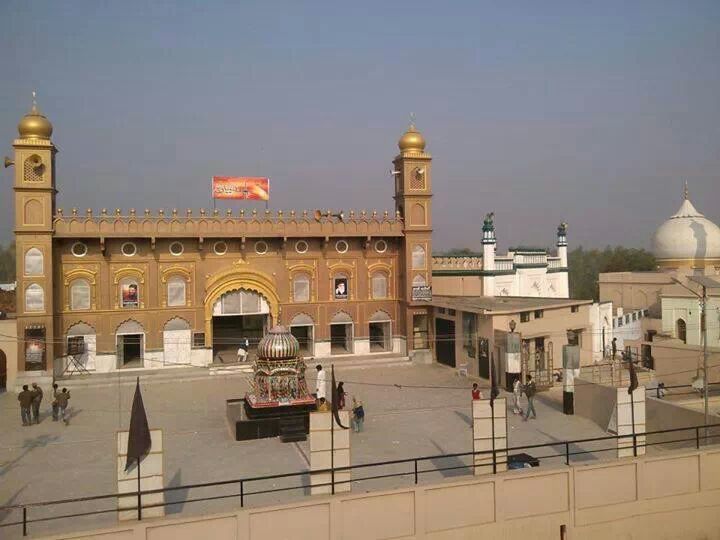
The ‘Saadat-e-Bilgram’ in common is a Muslim community found in the state of in India. However, many have migrated to Pakistan. They are also known as the ‘Bilgrami’ Sayyid (or Syed), and Bilgrami is frequently used as a surname.
The Bilgram Sadaat is a local group of Syed families who traditionally inhabit the historic town of Bilgram in the Hardoi District. ‘Saadat-e-Bilgram’ precisely means the Syed of the town of Bilgram.
The ‘Hussaini Sayyids (Syeds)’ first migrated from Wasit, Iraq, in the thirteenth century. Their direct ancestor, Syed ‘Mohammad Sughra AlHussaini’, a Zaidi Syed of Iraq arrived in India during the rule of .
History and Background
In 1217-18 the prominent family conquered and settled in Bilgram. The Syed commanded a Muslim army that overcame the Bhars, who remain the traditional rulers of the . And was granted an estate centered on the town of Bilgram, where the Sayyid settled down.
Died in 1247, his grand tomb was constructed by ‘Syed Mohammad Muhsin AlHussaini’ son of ‘Syed Mohammad Saeed AlHussaini’ in 1738-39.
Sixth in descent from ‘Syed Mohammad Sughra’ was ‘Syed Abdul Farah AlHussaini of Wasit’.
The most renowned Sayyid families in Northern India are descendants of “Syed Abdul Farah AlHussaini of Wasit”, the ‘Barhah’ and ‘Bilgram Sayyids’. And in ‘Khairabad’, ‘Fatehpur’ ‘Haswa’ and at many other places, branches of the same stem are found, who represents the ancestor of the ‘Saadat-e-Bara’.
Bilgarm Syeds
The ‘Bilgrami Sayyid’ were important power brokers in the southern part of ‘Awadh’ and undoubtedly remained an important and influential clan, throughout the Middle Ages.
They provided several ‘taluqdar’ families and were substantial landowners. The abolishment of the Feudal system by the genuinely independent India in 1949 received an enormous impact on the Bilgrami Syed community.
The larger estates were broken and land given to the tillers. This gently led to some considerable emigration of the Bilgrami to successful urban centers in India, such as Mumbai and Delhi. Also mass migration to Pakistan after Partition.
Many members of the community now cultivate their own land and grow wheat, paddy, maize, pulses, and vegetables.
They are principally Shia, although a few families are Sunni. The Bilgrami remain positively associated with the town of Bilgram, while others are found in twenty-one villages near the town.
Timizi Zaidi Sadat
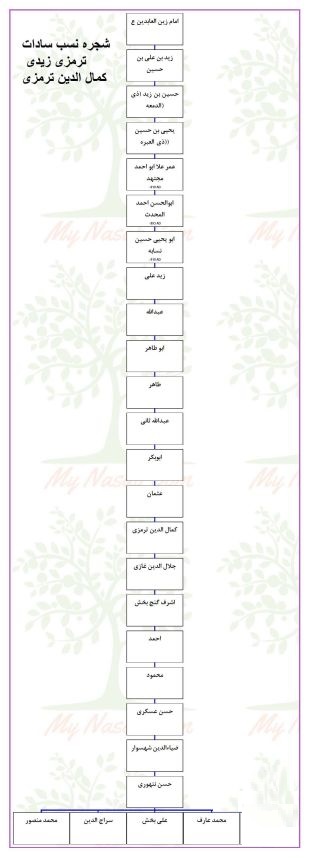
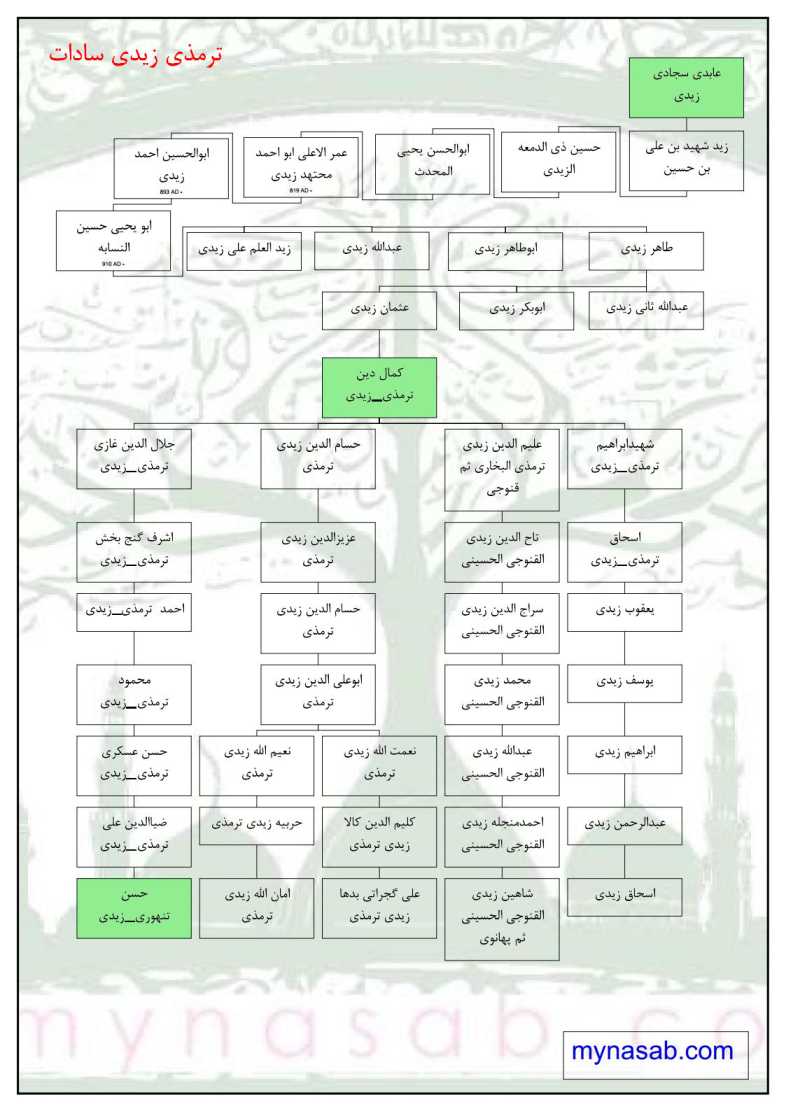
The Tirmizi Zaidi Ul Wasti Syeds are the descendants of Kamaluddin Tirmizi who arrived in India for preaching Islam in the 12th century AD. He was a successor of Zayd bin Ali bin Husain bin Ali bin Abi Talib.
Nehtaur Timizi Zaidi
Many of Sadat ( Zaidi) of Nehtaur (UP, India) are Tirmizi descendants of “Hasan Nehtauri”
The other Zaidi ul wasiti in Nahtaur are :
- Sadat e Bara (Zaidi Ul Wasiti)
- Rasooldar Zaidi ul Wasiti
Zaidi Al wasti Sadat Barha
شجره اولاد عبدالفرح زیدی الواسطی
سادات بارها
Sadat Bhara Branches Family tree
accompanied his four sons: Syed Abul Fazaail Faizi, Syed Abul Faraas, Syed Daud, and Syed Najm Uddin, came to India in the last decade of the fourth century of Hijri, along with Sultan Mehmood Ghaznavi.
The descendants of had been spread all over India. On the basis of residence, the Sadat of Syed Abul Farah Wasti is known as Chhati roadi, Jajmeeri, Kaundli wali, and Tahanpuri.
Sadat e Bhara
The largest group of Zaidis in Indian Subcontinent known as “Saadat Baraa”. Twelve villages in the Muzaffar Negar area, and the inhabitants of this area called ‘Sadat Bara’ (twelve). This explanation mentioned by Emperor Jahangir in his biography called ‘Tuk Jahangiri’ or ‘Jahangir Memoirs’.
The most famous opinion about the title in my research: Sadat lived in twelve villages in the Muzaffar Negar region.
سید عبدالفراح زیدی الواسطی سادات
مورث عالی زیدی الواسطی سادات بارها
Nethori Zaidi Sadat Family tree
Tirmizi Zaidi Sadat Family Tree
ترمزی زیدی سادات
Tirmizi Zaidi Sadat initially migrated from Iraq to the great Khorasan (which include modern Khorasan of Iran , Turkmenistan , Tajikistan and Afghanistan)
When Shahabuddin Ghori came to Afghanistan to attack India, he met Mr. Mir Syed Kamaluddin Tirmizi, who was going to India with his family with the intention of preaching.
Shahabuddin Ghori offered “Mir Sahib” to travel under his protection, which “Mir Sahib” did not accept and said:
“both of us have different goals, You are going to invade India and I am going to preach”. But Mir Sahib let one of his sons (Mir Syed Ibrahim Shah) to accompany Shahabuddin (who later died during the attack on Hansi Fort and is buried there).
Mir Syed Hasan (Nahtoor), one of the sons of Mir Kamaluddin *Mir Jalaluddin*, moved to our family town (Nahtoor).
Tirmizi Zaidi Sadat Family tree
ترمزی زیدی سادات
-
-
-
-
-
-
-
-
-
-
-
B : 819
-
B : 893 -
B : 910 -
-
-
-
-
-
-
-
-
-
-
Nethori Zaidi Sadat Family tree
ترمزی نتهوری زیدی سادات
Rasooldar Zaidi Sadat Family Tree
رسولدار زیدی سادات
Rasuldar (Rasooldar) zaidi wasiti Family Tree
Rasooldar zaidi wasiti , During the reign of “La’allh khalaji” in Delhi, 1309, Syed “Ziauddin A. Zaidi”. (the descendants of ” ) moved to Dehli, India, from Wasit. And due to the virtues Syed Zia to as appointed as ” Rasuldar “.
Since “ came from Wasit, he became known as “Wasiti”.
رسولدار زیدی الواسطی
رسولدار زیدی الواسطی
-
-
-
-
-
-
-
-
-
-
-
-
-
B : 819
-
B : 893 -
B : 910 -
B : 944 -
-
B : 1028 -
B : 1050 -
B : 1072 -
B : 1093 -
B : 1193 -
B : 1212 -
B : 1272 -
-
-
-
-
B : 1343+
-
-
گردیزی زیدی الواسطی
گردیزی زیدی الواسطی
-
-
-
-
-
-
-
-
-
-
-
-
-
-
-
-
-
-
-
-
-
-
-
-
-
-
-
B : 819
-
B : 893 -
B : 910 -
B : 944 -
-
B : 1028 -
B : 1050 -
B : 1072 -
B : 1093 -
B : 1193 -
B : 1212 -
B : 1272 -
-
-
-
-
-
-
-
-
-
-
-
-
-
-
-
-
-
قائم علی غوث زیدی (رسولدار)
-
-
-
-
-
-
-
-
-
-
-
-
-
-
-
-
-
-
-
-
B : 819
-
B : 893 -
B : 910 -
B : 944 -
-
B : 1028 -
B : 1050 -
B : 1072 -
B : 1093 -
B : 1193 -
B : 1212 -
B : 1272 -
B : 1343 -
B : 1365 -
B : 1413 -
B : 455 -
-
-
-
-
-
-
Please login to view the family tree
This post is also available in:


