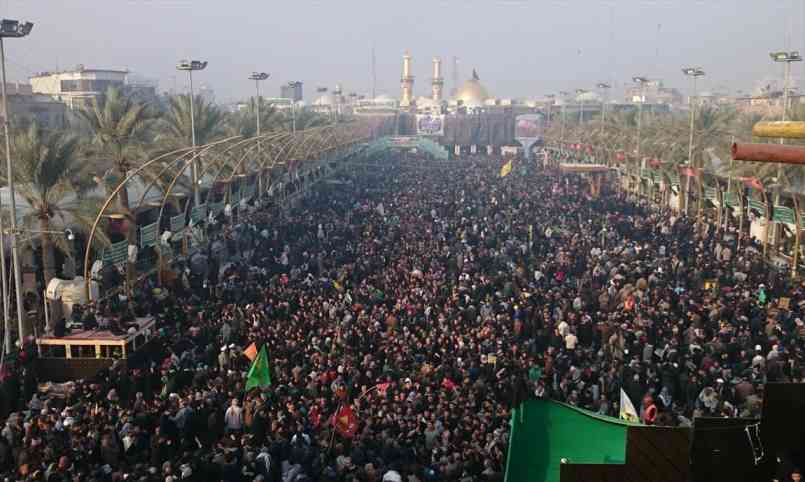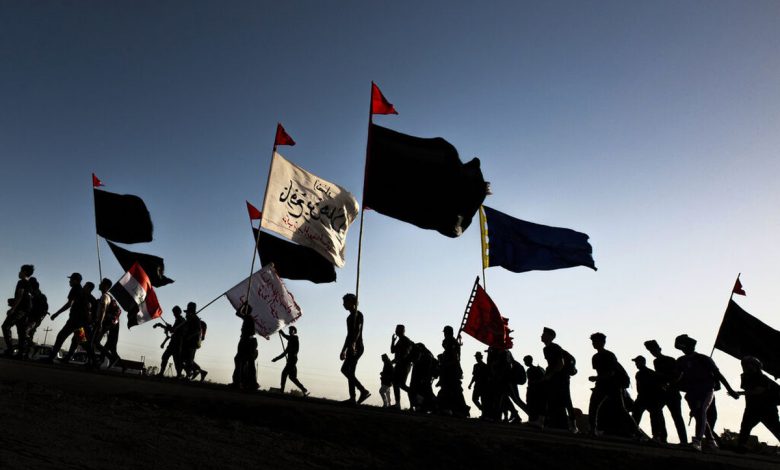
Arbaeen Mashi , the Arbaeen March is said to be the movement of a large number of Shiite Muslims to the city of Karbala, south of Baghdad, in order to gather them all on the 40th day after the anniversary of the martyrdom of Imam Hussein (AS), the third Shiite Imam in the Ashura event.
Arbaeen walk ‘ Mashi ‘ is one of the most powerful symbols of solidarity among the Shiite world. The Arbaeen gathering was attended by groups of Shiite Muslims, Sunni Muslims, Christians, Yazidis, and other religions. This event is the largest annual religious gathering in the world.
Arbaeen Mashi ,Walking through the sea and mud
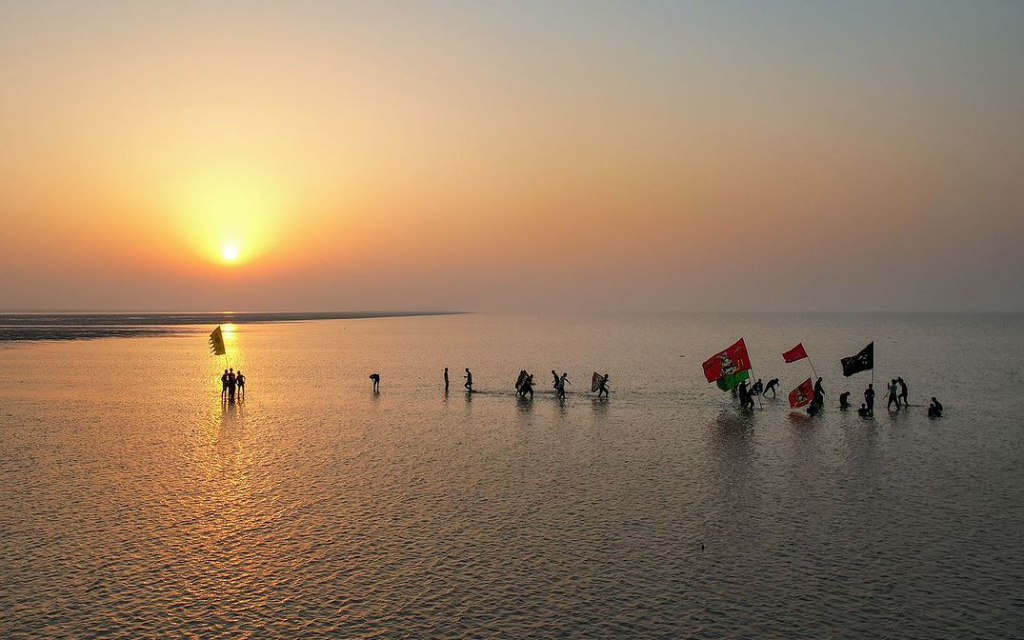
A group of Arbaeen pilgrims, who traveled from southern Iraq to Karbala, Arbaeen Mashi through Shalllow water and Muds
They started the Arbaeen pilgrimage and are on their way to Karbala from Ras al-Bisheh and Faw Port.
On this route, pilgrims spend hours passing through the watery and swampy path of Bandar Faw. pilgrims sat on the mud and mourned the loss of the martyrs of Karbala while holding flags decorated with the name and title of Imam Hussain (peace be upon him).
The mourning of the pilgrims on the Arbaeen Hosseini walk from Ras al-Bisheh continued for several hours
the people of Basra raised the biggest mourning flag of Seyyed al-Shahda (peace be upon him) while there are three weeks to Arbaeen Hosseini.
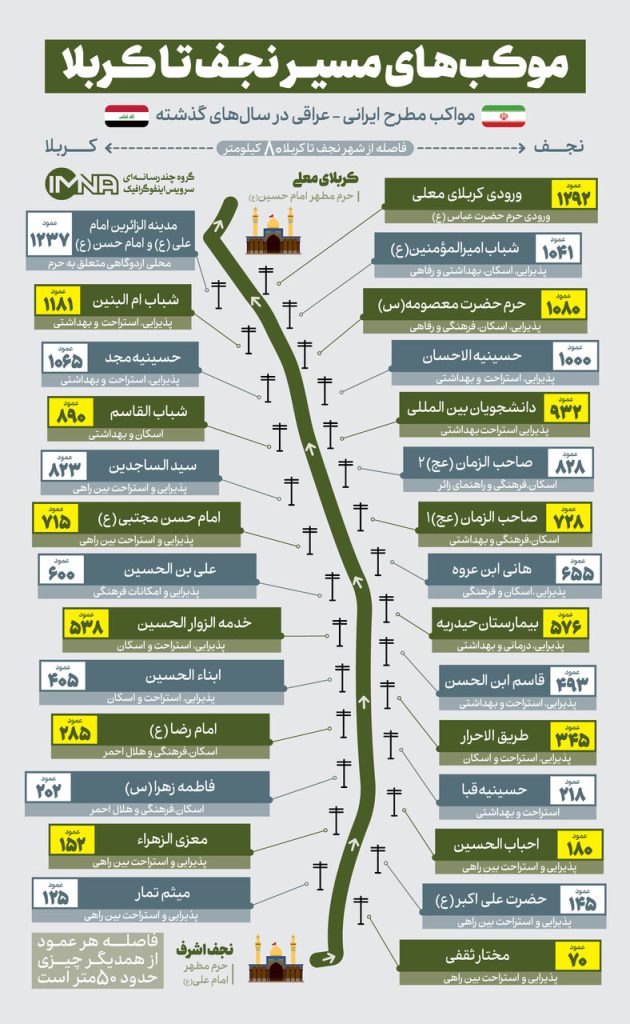
List of Arbaeen Mokebs 2023
Arbaeen 2023 Marching in hot weather with a temperature of 50 ‘C
This year’s Arbaeen coincides with the hot season in Iraq, so that the temperature reaches over 50 degrees during the day.
The Ministry of Health of Iraq has also put medical centers and hospitals on standby for the days of Arbaeen. Also, processions on the way to Arbaeen Mashi will be launched by the Ministry of Health of Iraq to familiarize pilgrims with ways to prevent heatstroke.
The Iraqi government has also proposed to install fog sprinklers on the Arbaeen walking route to reduce the heat of the air. During the mourning of the first decade of Muharram, especially Tasua and Ashura Hosseini, fog sprinklers were also installed in the middle of Haram.
Last year, the weather was very hot during Arbaeen Mashi. Nevertheless, many pilgrims walked the Arbaeen Mashi routes during the peak of heat and the processions were also active and served the pilgrims.
Accommodating Arbaeen pilgrims in air-conditioned processions
This year, more than 2,500 processions serve the pilgrims during Arbaeen, who are more active in terms of accommodation due to the hot weather.
Due to the heat of the weather, the pilgrims have been asked to pay attention to the installation of air conditioning and cooling systems such as air conditioners so that pilgrims can rest for hours in the processions and not suffer from heat stroke.
Distribution of cold water among Arbaeen pilgrims
Of course, the distribution of cold water at the borders and on the way of Arbaeen pilgrims is one of the other measures that are planned during the Arbaeen days this year; So that bottled water is being stored at the exit borders to be available to the pilgrims at the beginning of the Arbaeen walking ceremony.
The accommodation and feeding committee of the Arbaeen headquarters as well as other committees have planned measures to prevent pilgrims from heatstroke, which will be notified after the finalization.
Installation of mist sprinklers on the path of Arbaeen pilgrims
The installation of fog sprinklers and shade screens at the exit borders is also considered to prevent heatstroke and decrease the air temperature. Soon, all fog sprinklers will be installed at the exit borders, especially Mehran, Khosravi and Shalamche borders.
This year, the Arbaeen ceremony starts on the first of Safar at the same time as August 27 and continues until September 20. This year’s Arbaeen is on the 16th of September according to the Iraqi calendar.
According to Fars report, last year more than 21 million people participated in Hosseini’s Arbaeen ceremony, among which 3.5 million Iranians were also present.
What you see on the way
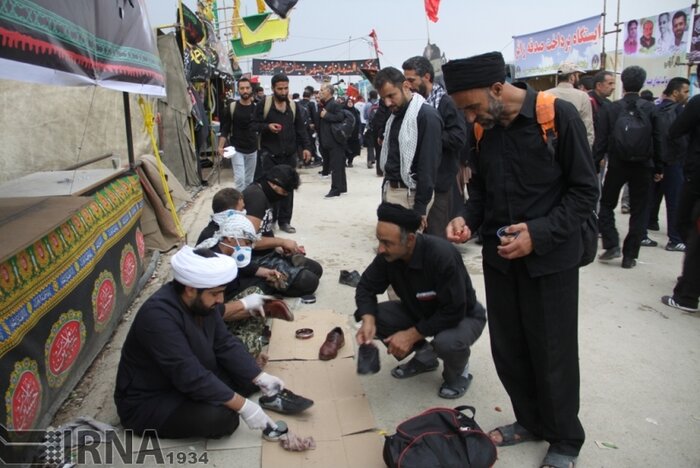
There were some kids who were asking us to polish their shoes, so someone wanted you to give them the pleasure of pressing their legs.
There were sofas on one side of the road so that tired passengers could sit and relax on them, while on the other side someone had left the best mattress of his house.
After all, who are these people and why are they distributing all these things for free on this road and why have they brought the best goods of their homes on the road?
This was the scene of the Arbaeen walk in Iraq every year in the Islamic month of Safar. Known as ‘Mashi’, this process is performed by millions of people every year on the occasion of the 40th birth anniversary of the Prophet’s grandson, traveling from Najaf to Karbala on foot.
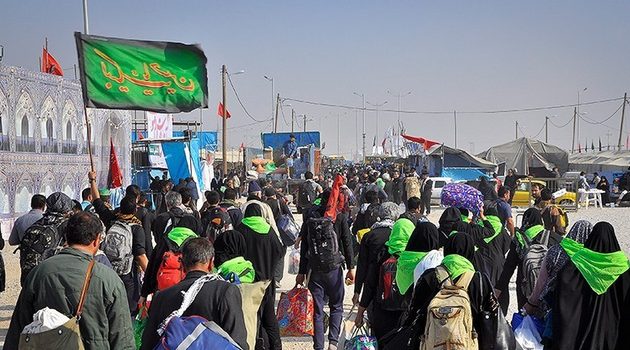
Walking distance
Iraqi pilgrims move from their cities to Karbala. But most Iranian pilgrims choose the route from Najaf to Karbala for walking. The walking distance between the two cities is about 80 km. There are 1452 columns on the way from Najaf to Karbala, the distance between each column is 50 meters. It takes about 20 to 25 hours to walk the entire route. The best time to start the journey is 16th Safar.
An 80 km long road. A common highway that connects two cities in any country, but the scene on this road connecting the two Iraqi cities of Najaf and Karbala, considered sacred to Shia Muslims, was something special.
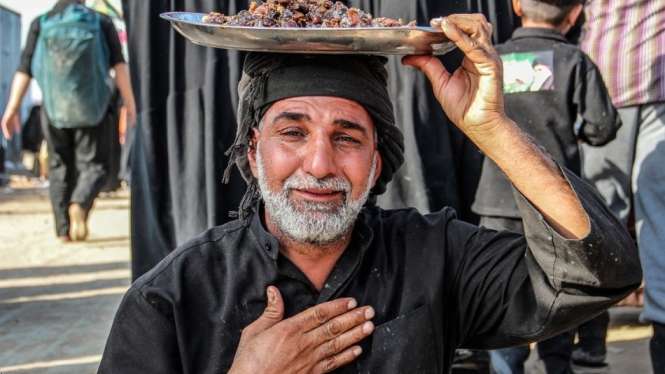
Free arrangement for every need of any traveler during the journey available along with the road. Do not mind if someone forces you to drink juice, someone would grab dates or other food items.
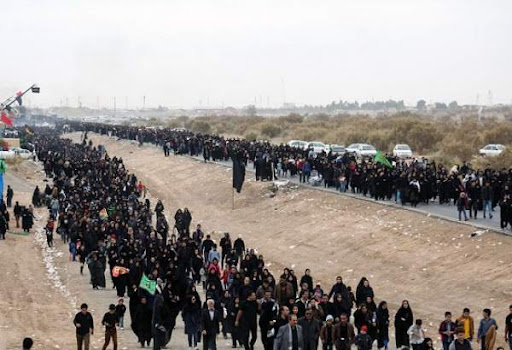
Customs
It is a whim to read about the customs of the Iraqis on their way to Karbala on the fortieth day; Husse is a special poem of the Arab tribes of southern Iraq, which expresses heroism and courage and is used to arouse the determination of men to do great and difficult things. After reading the poet, the audience repeats a bit of it and moves in a circle.
The mourning ceremony begins five days before Arbaeen with the arrival of the caravan of similitude and taziyeh battalions. Pilgrims stand at the entrance of Imam Hussein’s shrine and, while tapping on their chests, recite and repeat a lament, and at the end of the bust, they raise their hands in a sign of salutation.
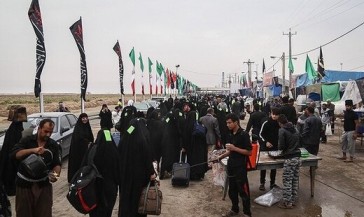
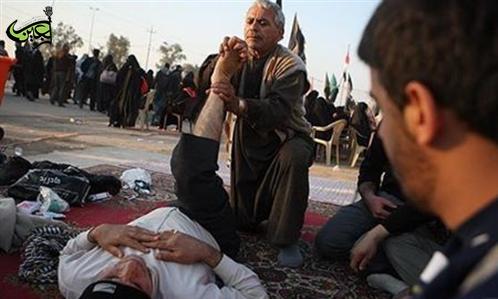
Setting up processions on the sidewalk
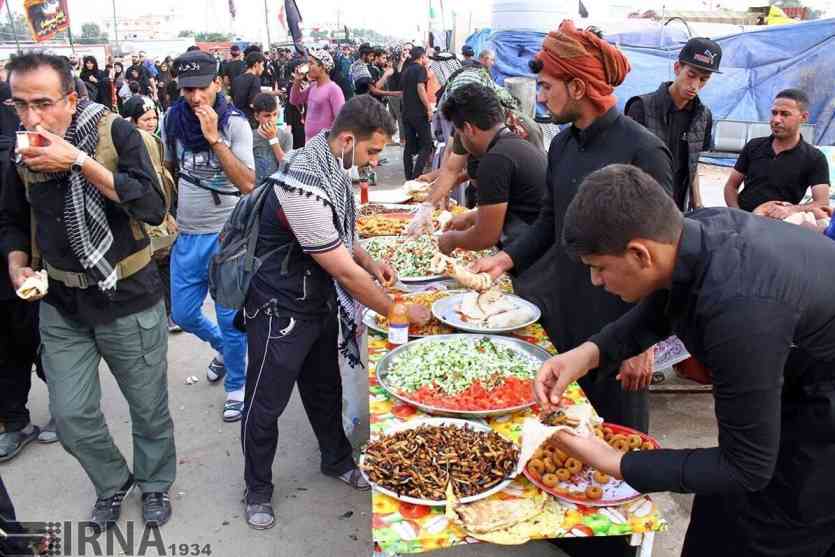
Every year on the march route, places are usually set up in the form of large tents called mokab (mourning committee) or “mudif” in a popular and spontaneous way. In these processions, health and welfare services and facilities are provided to the pilgrims free of charge. The Iraqi religious communities hold many processions for the pilgrims to rest and provide services to the pilgrims free of charge. The processions are managed in a popular way and independent of the government. The number of these processions has been announced as 7,000 in 2015.
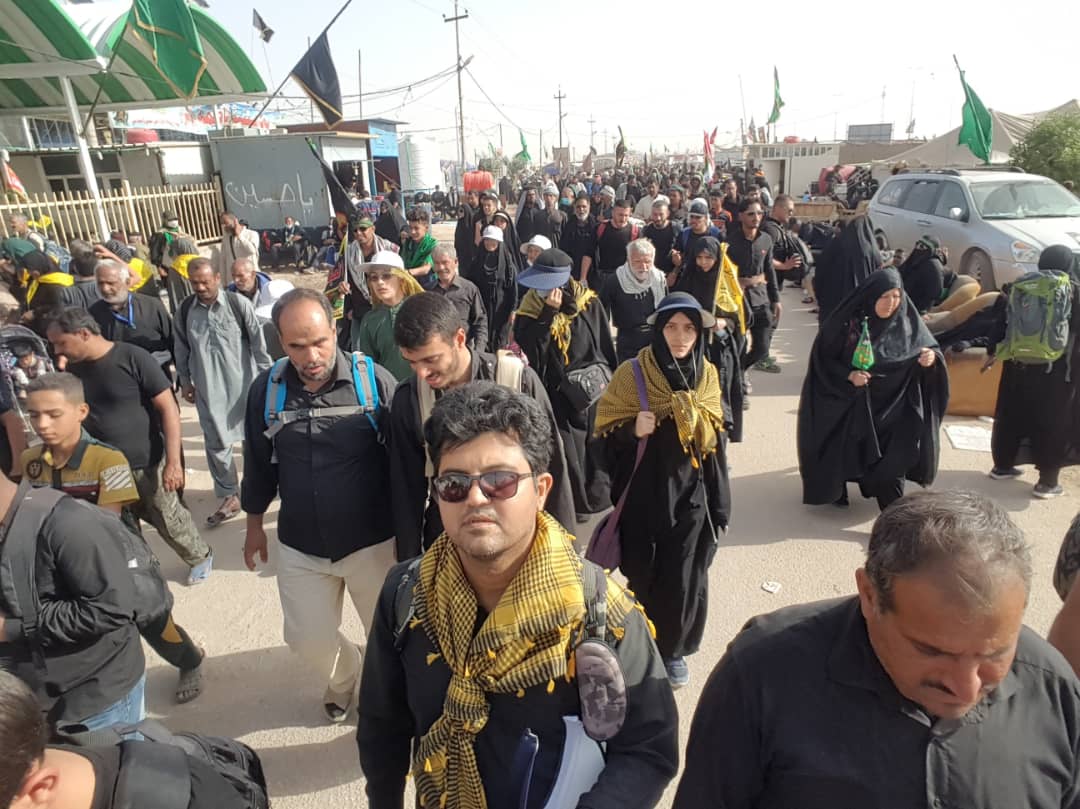
Many pilgrims from different countries of the world with special cultures and customs and different languages and faces came to Karbala on the eve of Arbaeen Hosseini, which happened this year as well, and according to some statistics, about 22 million pilgrims arrived in Karbala in Arbaeen Hosseini. .
Iraqi Shiites have a special respect for Husseini pilgrims and use all their power and facilities to serve the lovers of Aba Abdullah Al-Husseini.
Iraqi processions usually provide water, tea, coffee, food, fruit and a place of pilgrimage for pilgrims on foot from Najaf to Karbala.
Bitter Arabic coffee, which was still made quite naturally, was another means of reception that was welcomed by pilgrims.
The presence of various dishes that were sometimes prepared with rice and mostly in the form of bread and were given to the pilgrims was another means of reception that played an important role in satisfying the pilgrims’ hunger. Which should be mentioned
What is Arbaeen?
The beginning of Arbaeen’s journey
Usually the journey starts from Najaf and most of the people traveling for Arbaeen land at Najaf airport but for me this journey started from the Iraqi city of Basra.
I had heard that unmarried women are not given Iraqi visas, but when my number came, they were only asked in broken English and Arabic why they came to Iraq, I replied ‘Ziarat Hussain’.
No questions asked. The young man behind the mirror slammed a two-week visa on my passport and handed it back, saying, “Welcome to Iraq.”
Usually the journey starts from Najaf and most of the people traveling for Arbaeen land at Najaf airport but for me this journey started from the Iraqi city of Basra.
I had heard that unmarried women are not given Iraqi visas, but when my number came, they were only asked in broken English and Arabic why they came to Iraq, I replied ‘Ziarat Hussain’.
No questions asked. The young man behind the mirror slammed a two-week visa on my passport and handed it back, saying, “Welcome to Iraq.”
At airports around the world, you have to buy everything from food to drinking water, and that too at a high price, but at Basra Airport, water was free for visitors.
On the occasion of Arbaeen, almost everything is free except for plane tickets and visas.
It was estimated from the airport. Hundreds of buses and cars were parked outside the airport.
From Basra to Karbala or Najaf or wherever you want to go, these drivers will take you there at a reasonable price and if you don’t have money, don’t worry, Basra residents are free without any cost. I also seemed willing to do this service.
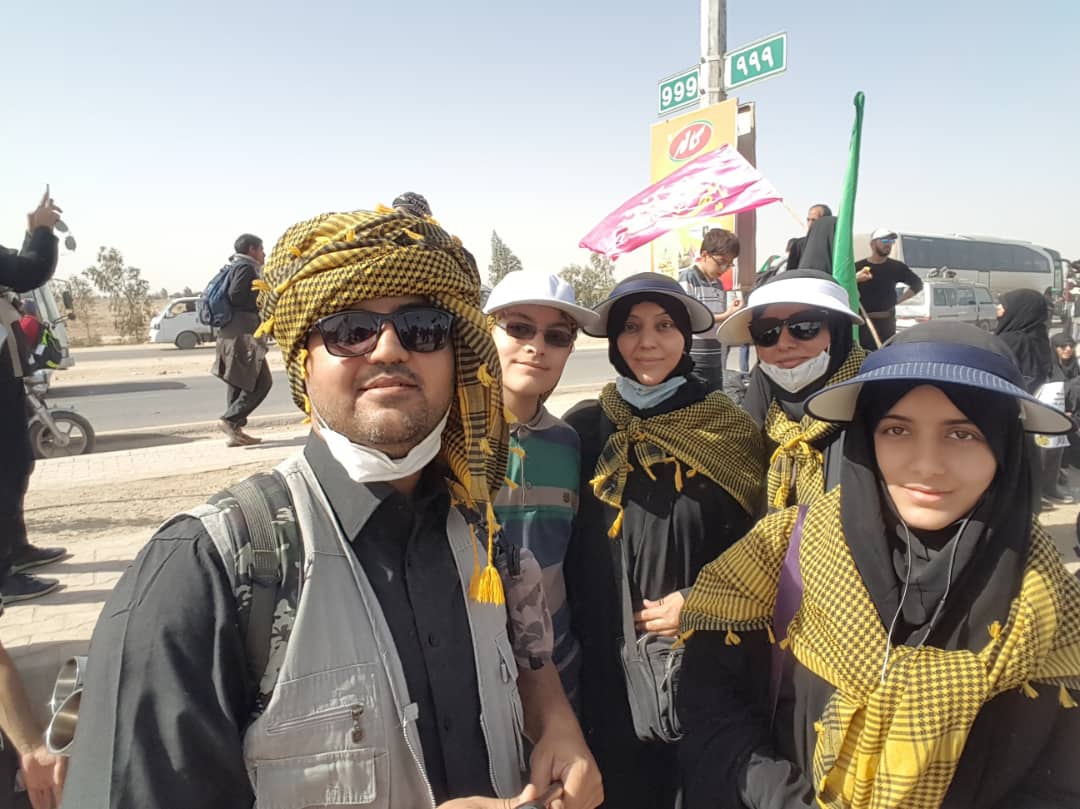
Arbaeen Mashi
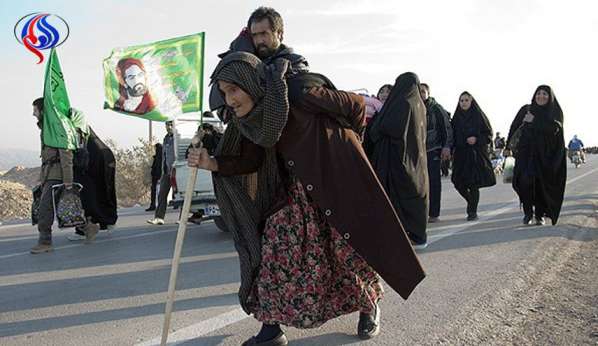
Some people were seen walking towards Najaf on foot with their luggage on their heads, while others had set up stalls to serve such passengers. It was as if the whole country was participating in this important festival.
After a three-hour journey, our car stopped somewhere. In the middle of the road, a man was standing with a black flag and was not allowing any vehicle to pass.
It was hoped that visitors would resume their journey after eating at his restaurant. I was in a hurry to reach Najaf but the host’s insistence was so strong that I had to get off.
The restaurant was adorned with words of appreciation for Imam Hussein and his companions and welcome banners for guests coming for Arbaeen Mashi.
Chairs were set up outside the restaurant for men, while for women, rest and meals were arranged in the house adjacent to the restaurant.
There were mattresses on the carpets for the comfort of the women. There were places of worship on one side and some Arab and Iranian women on the other.
Sheikh’s entire family was very happy in this service.
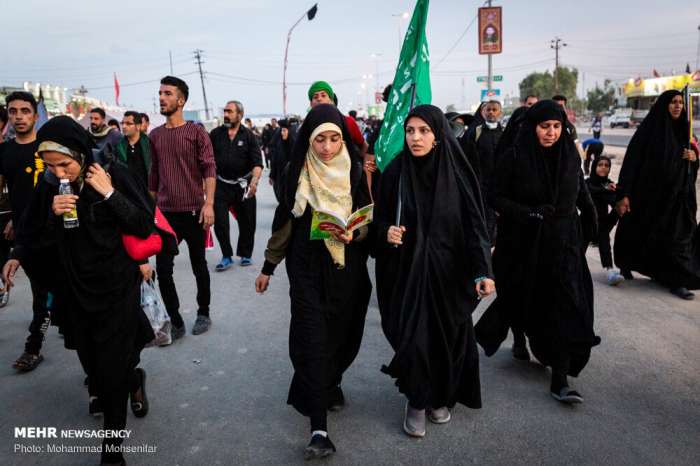
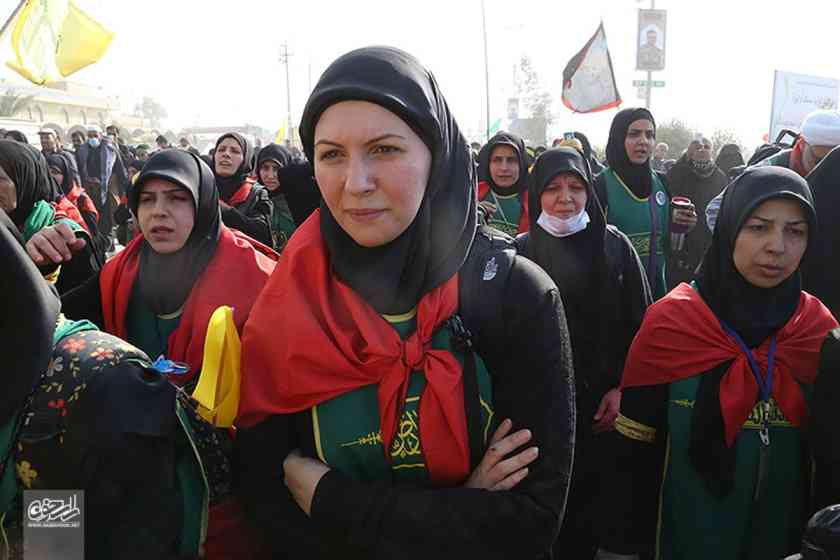
Walk from Najaf to Karbala
After this short stop, our bus reached Najaf after another hour’s journey. The journey of Arbaeen Mashi the pilgrims coming for Arbaeen starts with salutation at the shrine of Hazrat Ali in Najaf.
Every year, on the occasion of Chehlum-e-Imam Hussain, different estimates are made about the exact number of people who travel from Najaf to Karbala, but according to a conservative estimate, more than 30 million people gather in the area on the occasion of Arbaeen.
As soon as they reach Najaf, everyone rushes to Karbala. So most people leave their luggage in Najaf and travel to Karbala on foot with their luggage in small bags.
The distance from Najaf to Karbala is about 80 km. The road from Najaf to Karbala is called ‘N Najaf’. Most people who come for Arbaeen reach Karbala by walking on the same road.
Now it depends on your strength, health, and morale how long you walk daily and how many days you cover this distance but usually people who travel from Najaf to Karbala cover this journey in three to four days.
If you are attending Arbaeen Mashi for the first time, I suggest that you do not carry all the accessories from around the world in your bag like me because everything is free here. No matter how hard it is to lift weights.
All kinds of arrangements are made for the pilgrims going to Karbala at Najaf.
From food in every country of the world to baby pampers and tissue papers are available for free.
In some places, Iraqis have “marched” with their family names. You can also call them resting places and places to eat and stay.
Here you can rest for as long as you want from stopping for prayers and charging your mobile and other items in the meantime.
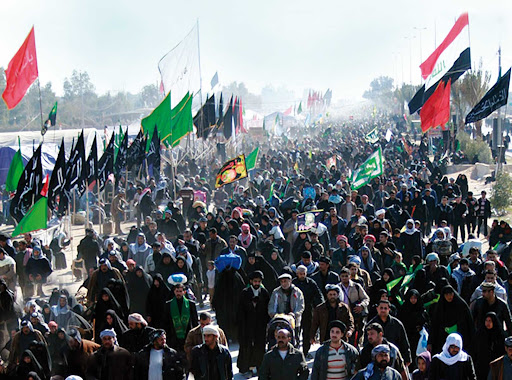
The Moqab has everything from charging wires, Wi-Fi, hot meals, massages, and foot presses to washing your dirty clothes.
If you feel unwell or need any medicine, there is a medical stall with staff every few kilometers.
Toddlers are seen carrying food items on their heads in large trays. They all insist that you eat their food.
In many places long tablecloths can be seen, it would not be wrong to call this road the largest tablecloth in the world.
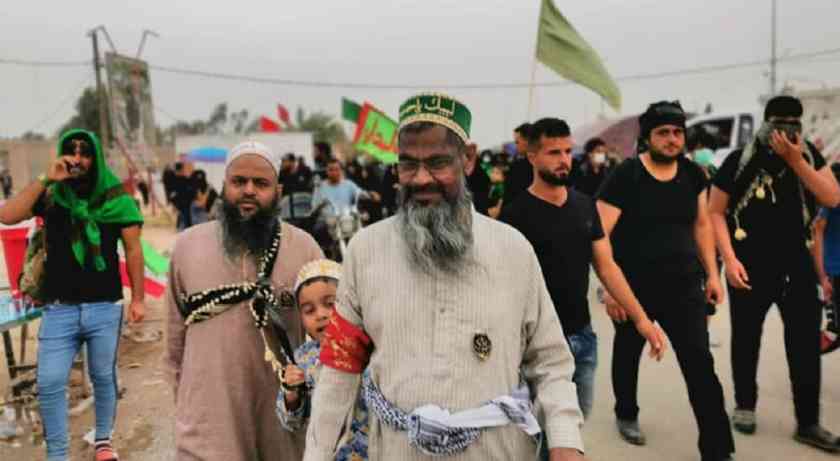
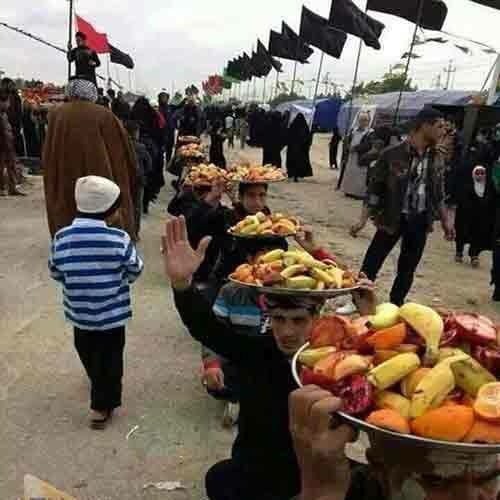
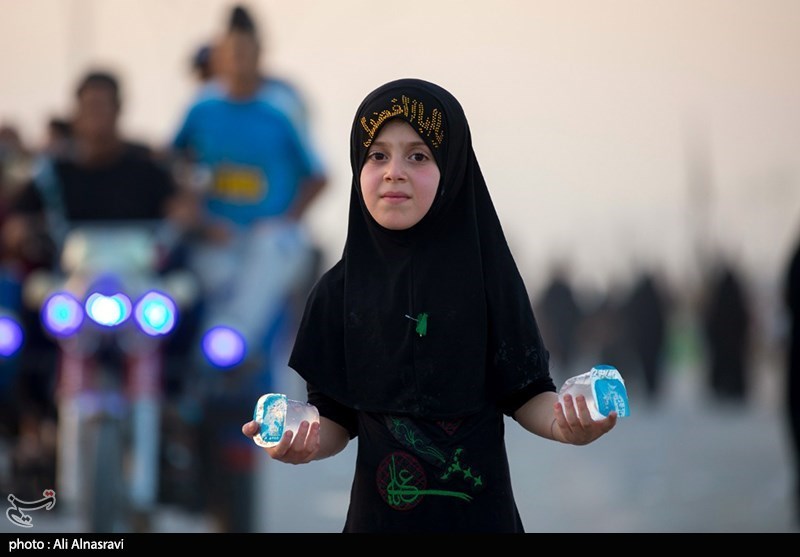
Iraqis consider not only the Arbaeen Mashi but also the service of those who come for it as an act of worship and that is why they do not spare any effort in the service of the pilgrims and the entire Iraqi family seems to be happy in this service.
An Iraqi man said children were specially involved in the process so that the pilgrimage Arbaeen Mashi could continue from generation to generation.
Although 99% of the arrangements on the road from Najaf to Karbala are made by local Iraqis, there are stalls from almost every country.
Somewhere Pakistanis are watching your way by making biryani and tea, somewhere suddenly a Lebanese comes in front of you and stops the falafel.
In Arbaeen Walk, where there is no difference of gender and age, this journey is not limited to Shia Muslims only, but Sunni, Kurdish, Yazidi, Christian people of all religions and sects seem to flow in harmony with each other.
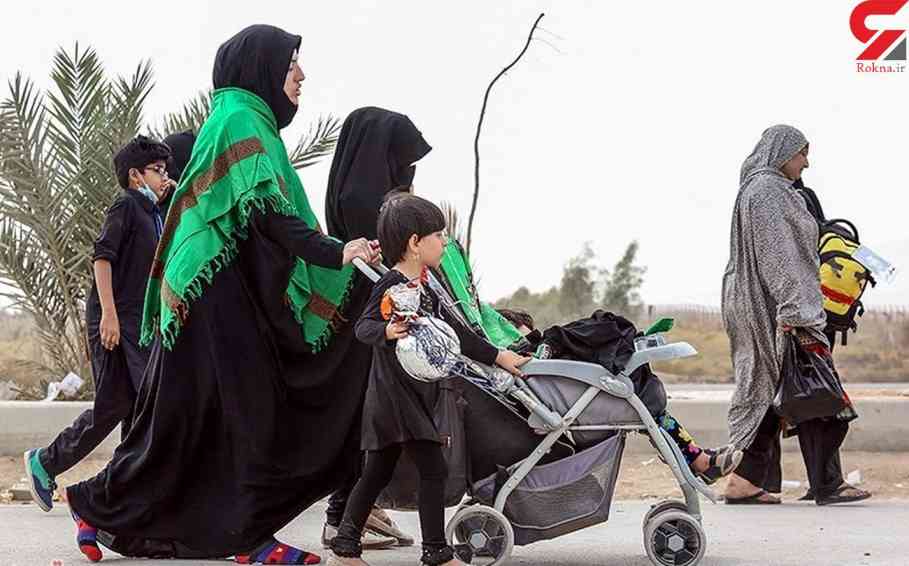
An Iranian woman was on her way to Karbala for her one-and-a-half-month-old baby. Her two children were sitting in a walker run by her husband.
In the distance, a young man in a burqa was seen driving a wheelchair.
It was discovered that his frail mother was unable to walk, but she wanted to go to Karbala on the occasion of Arbaeen this year.
At one point he saw women in black burqas in a line of camels. Their hands were tied with ropes.
On inquiry, it was learned that on the occasion of Arbaeen, many tribes from different parts of Iraq arrive in Karbala in the form of processions commemorating the events of Karbala which can reflect the events that took place during this time.
Karbala and Arbaeen
At a checkpoint on the outskirts of Karbala, the women were taken to a room and seated, and told to sit quietly and drink tea while their luggage was being checked.
One day before Arbaeen, various caravans gradually reached Karbala, and our caravan was one of the same caravans that reached Karbala and settled in a corner of this city southwest of the Euphrates.
But the atmosphere of Karbala was different from place and time and it is indescribable, red, white and black flags greeted the pilgrims with a gentle breeze everywhere in the city, cars were not allowed to enter the city, only carts It was a tree that had the right of movement and movement of passengers and cargo, which was also moved by teenagers from this city.
There are a total of 10 doors to enter the shrine of Imam Hussain and there was so much rush at each door that God’s refuge.
At first, I thought I would never be able to go in and even if I tried to go, my bones would break. Well, this idea later proved to be wrong.
On the occasion of Arbaeen, since millions of people come to Karbala and each has a goal to reach the shrine of Imam Hussein, the Iraqis have made arrangements that take you two to three hours, but everyone must reach the shrine. Is.
Visitors come from one side, touch the shrine and go straight out.
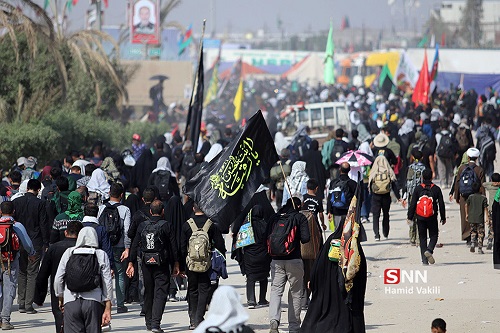
Every caravan and pilgrim has chosen a home in a corner of this city of God as if nowhere in the world is the comfort and security of Karbala Hosseini. Accommodation to the two shrines was almost long and the wait seemed to be longer than before, we passed Al-Zahra Square near the shrine, a gentle breeze caressed the face and soul. There were warm tears in his eyes; When we set foot on Baba al-Qiblah Street, from the distance, the golden dome and minaret of the shrine could be seen, which is undoubtedly the dream of every loving pilgrim and will brighten the body and soul of the person who gave it.
We do not believe that we are standing in front of the holy shrine of Imam Hussein (AS), the same shrine that we have asked for pilgrimage over and over again in our prayers. , This was the place you should have whispered to yourself: “Peace be upon Ali al-Hussein, Ali Ali ibn al-Hussein, Ali’s descendants, and Ali the companions of al-Hussein.”
On the threshold of the holy shrine, our hearts were filled with tears, and every time we approached the holy shrine with its flower and golden dome, our heart beat faster and we thanked God more and more, and this was the words of Hazrat Aba Abdullah Al-Hussein (AS) who Karbala said in Sargogha: “F on your friendship of the times! “What happened to you in the morning and in the evening?”
But we did not enter the shrine but took the path of the two shrines to attend the shrine of Hazrat Aba al-Fazl Abbas (AS) while visiting the shrine to obtain permission to enter the shrine of the Imam and his older brother.
The shrine and shrine of the scholar of Karbala and the faithful friend and devoted brother of Imam Hussein (AS) is located 300 meters north of the shrine of that Imam, that is, the place where Hazrat Abolfazl (AS) was martyred. This is a place where choosing which shrine to enter is a bit difficult.