The Syed Family
This post is also available in:
The Syed Family linage (Shajra Nasab), A brief introduction to descendant of Mudammad (p.b.u.h), Hassani sadat (tabātabāei, Gillani, Mudaresi,…) Hussaini Sadat(Abedi, Zaidi, Rizvi, Naqvi,Musavi,…)
The Sadat lineage
The Sadat lineage is one of the oldest, most trusted, and extensive (in terms of population and geography) in the world. The lineage of Sadat’s lineage reaches the Prophet of Islam through Fatima, and from that Imam to Ibrahim and Adam.
The Arabs also had a special sensitivity to ancestry before Islam, and after Islam, they honored Sadat because of the belief and respect that Muslims had for the family of the Prophet.
This belief and respect for the descendants of the Prophet is more intense among Iranians who have loved the Ahl al-Bayt.
ُSyed/Sayyid (Arabic: سیّد, feminine: Sayyida(سیّدة), Arabic plural: Sada (سادة); noun: Siyada (سیادة)) is an Arabic honorific title denoting descendants of Prophet Muhammad (s). However, publicly this title is mostly linked to the descendant of Lady Fatima (a) and Imam Ali (a) and the best-known branches of Sayyids are those whose lineage reaches one of Imams. There are various branches of the #Syed_Family_tree_linage.
🔒 Private Access Notice
Family trees and many site features now require you to be logged in. This helps us protect your family’s privacy and provide a better experience.
[] or []
The genealogies on this site are presented in a logical/Graphical manner, so that it can be used by everyone, special topics that need to be explained will be added over time.
If you have any new information about any of the people in the genealogy, send us and we will use it in your name.
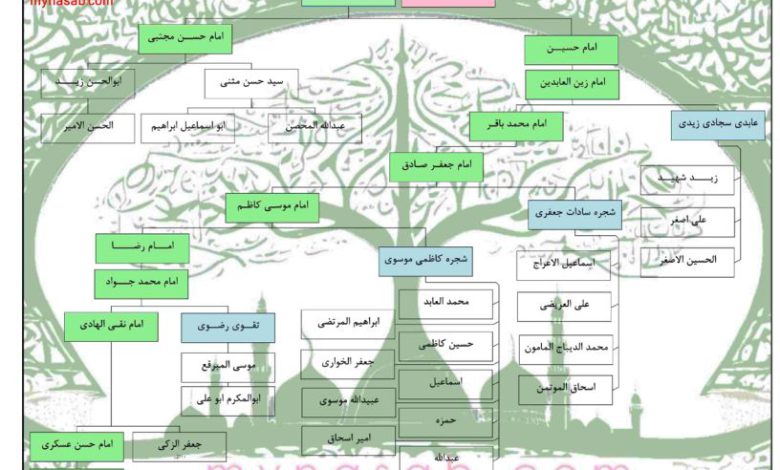
Sadat Family Tree (Shajra) Main Branches
Ale Reza (Sadat Riavi / Naqvi / Taqavi)
Ale Reza (Sadat Naqvi)
Husseini Sadat Main branches
شاخه های اصلی سادات حسینی
Abedi / Sajjadi / Zaidi / Sadat
‘
Imām al-Sajjād
ʿAlī b. al-Ḥusayn b. ʿAlī b. ʾAbī Ṭālib (Arabic: عَليّ بن الحُسَین بن علي بن أبي طالب) (b. 38/659 – d. 95/713) known as Imām al-Sajjād (امام السجاد, lit. the Consistently Prostrating) and Zayn al-ʿAbidīn (زين العابدين, lit. Adornment of the Worshippers) is the fourth Imam of Shi’a.
He (a) was poisoned and martyred by order of al-Walid b. ‘Abd al-Malik. He (a) was buried in al-Baqi’ cemetery beside his uncle Imam al-Hasan al-Mujtaba (a).
Children
In historical sources, the number of Imam al-Sajjad’s (a) children has been counted as fifteen, eleven of whom were boys, and four of whom were girls. According to al-Shaykh al-Mufid, the names of his wives and children were:
- (a) whose mother was Umm ‘Abd Allah (Imam al-Hasan’s (a) daughter).
- Abd Allah AL Baher
- Al-Hasan
- Al-Husayn al-Akbar
- Umar Al Ashraf
- Husayn al-Asghar
- ‘Abd al-Rahman
- ‘Ali Al Asghar: who was Imam al-Sajjad’s (a) smallest child.
- Al-Muhammad al-Asghar: whose mother was a maid.
Abedi Sadat
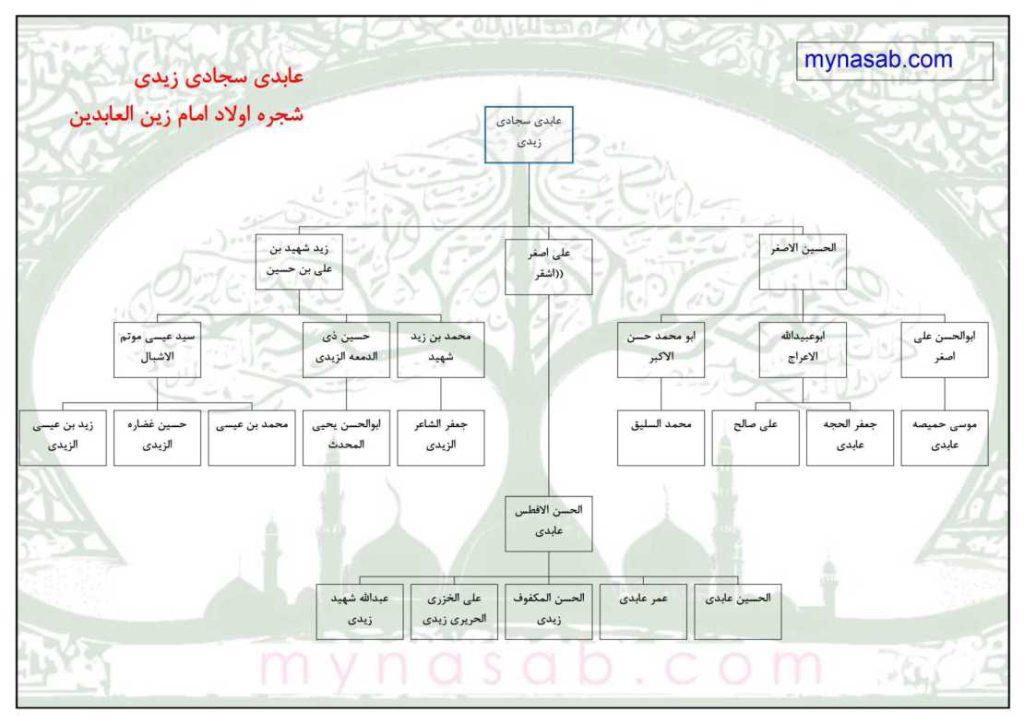
Zaidi Sadat
‘Al-Zaidi’ surname is a descendant of the . Al-Zaidi’s surname begins with , son of ‘Zayn al-Abidin (AS)’. Thus all those whose lineage goes back to, the great-grandson, the are known as ‘Zaidis’.
‘Zayd’ belonged to and one of their elders in grace and understanding and praised for his knowledge, asceticism, piety, courage, religiosity, and dignity …….
Children
Bin Zaid, , , and
Zaidi Sadat
Ja’fari Sadat is a descendant of Imam Ja’far sadiq, except for the children of Imam Musa Kazim, who are called Musavi or Kazemi Sadat , and Isma’il, who may called Ismaili Sadat, the rest can be considered as Ja’fari Sadat .
Imam Ja’far al-Sadiq (a) is the sixth Shi’a Imam and the son of (a) who was martyred by poisoning in 148/688.
Imam Ja’far al-Sadiq (a) was born in Medina in 83/662 and during his imamate, he revived Shi’a religion and the Religion of the Prophet Muhammad (s). His father, , and his mother, um Forouh, the daughter of Qasim, the son of Muhammad bin Abu Bakr.
Children of Imam al-Sadiq (a)
According to most sources, he had seven sons and three daughters. (a), the seventh Shi’a Imam, is one of the children of this great Imam whose mother’s name is Hamida, daughter of Sa’ed or Salih.
Isma’il, ‘Abd Allah, Um Forouh, whose mother of these three was Fatima, daughter of Husayn b. ‘Ali al-Sajad,
Musa, Ishaq, Muhammad, whose mother named Hamida Barbariyya,
And Abbas, Ali, Asma, Fatima
Jafari Sadat Family Tree
Hazrat Musa bin Jafar (128-183 A.H.) nicknamed and famous as “Imam Kazem”, is the seventh Imam of the Shiites. Imam Kazim reached the Imamate after the martyrdom of his father, Imam Jafar Sadiq (peace be upon him). He led the Shia for 35 years from 148 to 183.
He was a contemporary of four of the Abbasid caliphs, all of whom were opposed to the Shia and put a lot of pressure on Imam Kazim and his companions. And finally he was martyred during the caliphate of Harun al-Rashid and with his conspiracy.
Kazmi Sadat
Razavi / Taghavi Sadat
ʿAlī b. Mūsā (a) ʿAlī b. Mūsā (a) (Arabic: علي بن موسی) (b. 148/765 – d. 203/818) the eighth Imam of Twelver Shia; his most famous title was al-Riḍā (Arabic: الرضا). Imam Reza (a) was born in Medina, and martyred at the age of 55 in Tus, after 20 years of Imamat. Ma’mun Abbathit brought Imam Reza (a) to Khorasan despite Imam’s will made him crown prince. The debate sessions al-Ma’mun al-Abbasi held between Imam al-Rida (a) and personalities of other religions and schools of thought are famous. Imam’s holy shrine is located in Mashhad, Iran where millions of Muslims from different countries visit every year.
Ale Reza Rizvi / Taghavi Sadat
Naqvi Sadat
Hasani Sadat Main branches
اولاد امام حســــن مجتبـــی ع
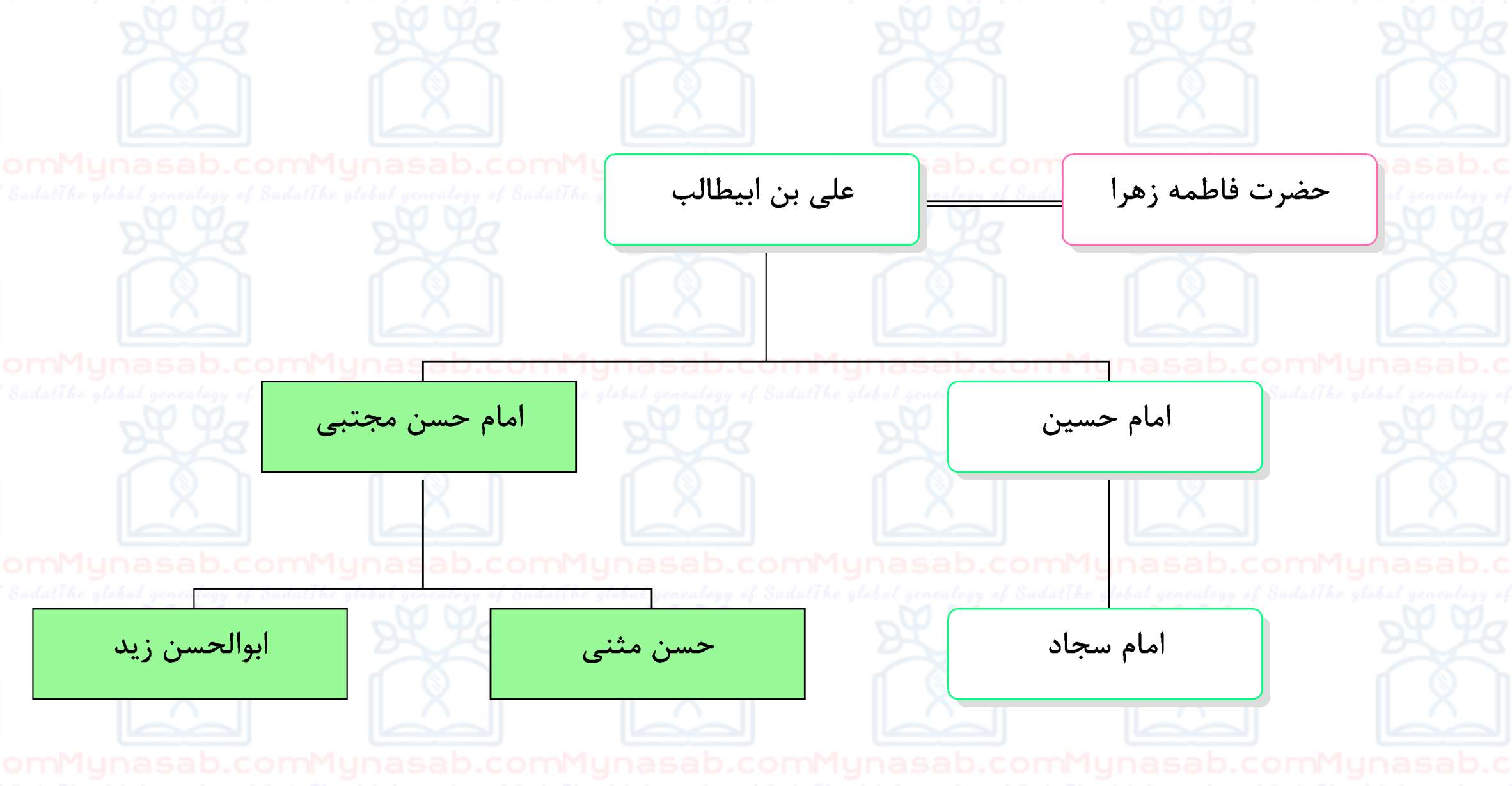
Hasani Sadat
Sadat Hassani or Bani Al-Hassan is a branch of Sadat which attributes to Imam Hassan Mojtaba (AS). This branch of Sadat has had many political and social movements throughout the history of Islam; as well as uprisings in the second and third centuries. They established several governments in different parts of Islamic countries, some of which still exist. Sadat Tabatabai, Modares, Hakim, Gillani … are some of Sadat Hassani’s subordinates. Imam Hassan Mojtaba (AS) is mentioned as having eight sons, six of whom have not been named at all in history. They died at a young age; And Abu Bakr, Qasim, and Abdullah (Asghar), all of whom were martyred as teenagers in Karbala. Therefore, only the descendants of Hassan Muthanna and Zayd bin Hassan remained.
Hasani Sadat
Gilani Sadat
The Gilanis as subordinate to are descendants of Abu Mohammad Abdul Qadir Gilani
Abu Mohammad Abdul Qadir Gilani (471-561 AH / 1078-1116 AD), nicknamed Mohiyat al-Din, mystic, Sufi, and Iranian poet of the fifth and sixth lunar centuries. Abdul Qadir Gilani (or Jili) is one of the famous mystics in the history of Islam and one of the famous Sufi sheiks, to whom one of the most important Sufi sects in the Islamic world, namely the Qadiriyya sect, is attributed.
Gilani Family Tree
About Syed/Sadat
Syed and Sadat Genealogy
In the present case, the person who has reached the Holy Prophet (PBUH) says Sayyid (the descendants of the Prophet). And since Fatima Zahra was the only child of the Prophet of Islam, Sadat came to the Prophet through Hazrat Fatima (sa). Many Syeds (Sadat) have a written family tree called “Shajar Namah”. Practical journals also mention ways to prove the sovereignty of individuals, including genealogy and the place where it is said that the father and ancestor of this person were Sayyids.
The Origin of Sadat
The Bani Hashim were from the Quraysh tribe and lived in Mecca, and were known among the Arabs for their magnanimity and decency. Bani Hashem is attributed to Hashem (Amr) Ibn Abd Manaf Ibn Qusay Ibn Kaleb. Muhammad bin Abdullah, the Prophet (PBUH) of Islam was from this tribe. Bani Hashem supported the Holy Prophet (PBUH) during the rise of Islam; Especially during the leadership of Abu Talib.
Syed Subcategory
Sadat literally means the elders and according to the jurisprudential definition, is a title for those whose lineage goes back to Hashem ibn Abd al-Manaf (grandfather of the Muhammad (PBUH)). In the custom of the people, Sadat are more connected with the generation of Hazrat Zahra (PBUH) and Imam Ali (AS). The most famous branches of Sadat of their generation reach the Shiite Imams.
Sadat has different branches, the main and most important of which are Hashemi, Mohammadi؛ Hassani (Hassani, Gilani, Tabatabai, Hashemi)؛ Hosseini, ( Zaidi, Mousavi, Kazemi, Razavi, Naqvi, Askzariand Sub branches like Gardezi Sadat).
Geographical population distribution
During the historic Umayyad period and the Abbasid period until the end of the Mutawakkil caliphate, due to the oppression of Sadat, some of them hid their sovereignty or were forced to migrate to more distant places. …..
Iran, Central Asia, Yemen, Syria, and North Africa, and many to the Indian subcontinent are among the areas that Sadat has stalled over the centuries.
Among the Muslims who migrated to India throughout history and the course of the political-military developments of the Muslims in the subcontinent, can be remembered as the most important and respected among them.
By the influence of their words and Spiritual personality and character, made the local people and communities accepted and valued their beliefs. Due to their social and religious position in the Islamic world, Sadat succeeded in promoting Islam in the subcontinent.
mostly came to the sub-continent as a tribe, and since they were mostly warriors and generals, they were able to find a special place in the power pillars of the sub-continent and always played a vital role in strengthening or destroying the kingdoms in this region.
By playing a role in the social issues of Indian society and participating in political competitions; strengthened their position with the rulers and the people.
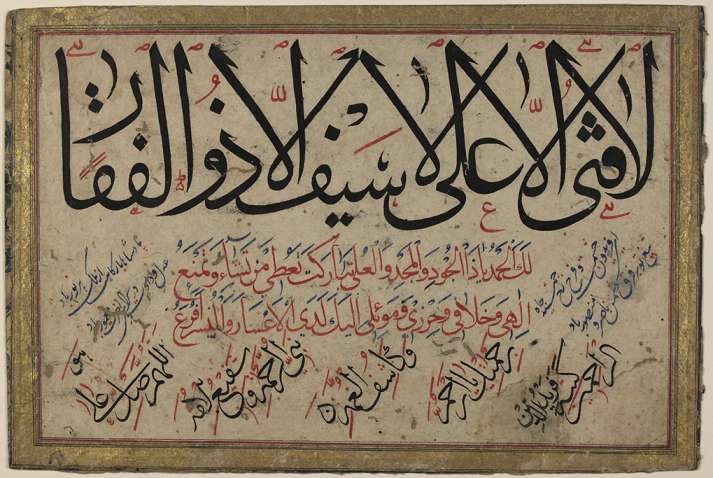
We gathered Family trees submitted by the esteemed Syeds as well as the available Family tree scripts. They have been reviewed by our experts and uploaded to the site after evaluation…
We are compiling and building a complete Sadat genealogy. Every bit of information is valuable to form a database and eventually a family tree. Please , and share your ancestor’s information and be a part of the movement; to form the most reliable and comprehensive database of Sadat.
Hazrat Fatima Zahra the mother of the Sadat
Fatima Zahra, In the History of Islamic history, few figures shine with the profound and enduring light of Hazrat Fatima Zahra (SA). As the beloved daughter of the Final Prophet, Muhammad (PBUH), and the wife of the first Imam, Ali (AS), her life represents the sacred bridge between Prophethood and Imamate.
Yet, for all her esteemed titles—Az-Zahra, As-Siddiqah, Sayyidatun Nisa al-Alamin—her most pivotal role for humanity is as the mother of the Sadat. From her noble lineage, carried through her sons Al-Hasan and Al-Husayn (AS), flows the pure stream of the Ahl al-Bayt, blessing the world with generation upon generation of noble descendants. This article delves into her complete life, exploring how the Prophet’s daughter became a timeless beacon of faith, resistance, and the mother of the Sadat for all time.
FAQ
Who are Sadat or Syed?
Sadat, in fact, are all attributed to Hashem, the ancestor of the Holy Prophet of Islam (PBUH); Hence, all those who are attributed to Hashem by their father can be called Sayyid. But Sadat in modern terms refers to those who are the children and grandchildren of Imam Ali (AS) and Hazrat Zahra (AS) who, due to the continuation of the generation of the Prophet of Islam (PBUH) through Hazrat Zahra (AS) to The Holy Prophet of Islam (PBUH) will also be attributed.
But because the children and grandchildren of Imam Ali and Hazrat Zahra (PBUH) were numerous and each of them had children; Hence the offspring were each sometimes attributed to their fathers and grandfathers; For example, the children and grandchildren of Imam Hassan (AS) have been nicknamed Hassani, Imam Hussein (AS) to Hosseini, Imam Musa Kazem (AS) to Mousavi, the descendants of Imam Reza (AS) Razavi, etc. Therefore, Seyyed Mousavi is Seyyed Hosseini, Seyyed Hosseini is Seyyed Alavi, and Seyyed Alavi is Seyyed Hashemi. But Seyyed Alavi is not necessarily Seyyed Mousavi, or Seyyed Hosseini is not considered Seyyed Hassani. But all of them will be attributed to the Holy Prophet (PBUH) and even to Hashem; That is, everyone can be called Seyyed Hashemi or Mohammadi.
Why are people whose mother is Sayyid not considered Sayyid, when all the children of Hazrat Fatemeh Zahra (PBUH) are considered Sayyid?
The word “Sayyid” in Islam refers to those whose lineage goes back to Hashem, the ancestor of the Prophet of Islam (PBUH), even though they are not descendants of Hazrat Zahra (PBUH). In other words, Sadat refers to those whose lineage goes back to Hashem, and they do not have to be descendants of Hazrat Zahra (PBUH). Therefore, the children of Hazrat Zahra are not Sayyids because they are attributed to them, but because they reach Hazrat Hashem from their father and mother.
People whose mother is Sayyid are attributed to Hazrat Fatima (AS) in terms of sovereignty, but it is necessary to pay attention to the fact that the term “Sayyid” is not limited to the children of Hazrat Zahra (AS), but all people who are related to Hashem and His descendants are also considered Sayyids, and all Muslim scholars agree on this issue, and it is only disputed in some of the rulings on it; Such as paying khums, which in the opinion of most jurists is not permissible.
From this statement, it became clear that the people whose mother is Sayyid are certainly descendants of the Messenger of God, as the Imams (as) were also considered descendants of the Prophet for this reason. Evidence of this issue is a narration, which Imam Reza (AS) said in response to Ma’mun Khalifa Abbasi:
Ma’mun said to the Imam: “I have come to this conclusion with the research I have done. There is no difference between us and you in terms of lineage, and we are the same in terms of virtue of both groups, and the difference that our followers have in expressing our virtues.” They say, it is caused by the air of breath and prejudices.
Imam (AS) said: If you allow me, I will answer the question, and if you do not want, I will not answer it. Ma’mun said: I asked this question to use you. And if your daughter proposes to herself, what do you do? Ma’mun said, Glory be to God! Can anyone be found who is not happy with such a connection ?! Hazrat said: Can I be satisfied with such a connection ?! With a moment’s hesitation, Ma’mun replied, “By God, your closeness is attached to the Messenger of God.” [1]
From this narration, it can be concluded that the children and grandchildren of the daughter of the Messenger of God are also among them and marriage with them is not permissible for the Messenger of God.
But racial and tribal attribution by the father is a common and customary thing. It is necessary to pay attention to it, some customary affairs among the nations have also been accepted by Islam as a principle; The reason for this is also devotional and it is mentioned in the narrations. In the subject in question, Imam Kadhim (AS) after stating the deserving of khums says: A person whose mother is from Bani Hashem and his father is from other Quraysh tribes, can use alms and does not benefit from khums; Because God says in the Qur’an: “They call people to their fathers” means they call people to their fathers.
What is the reason for respecting Sadat? Is there a difference between sadat and non-sadat in this world and the hereafter?
Sayyid literally means “gentleman”, “noble”, “chief” and in the term, Persian speakers and Shiites, refers to those whose lineage leads to the Messenger of God (PBUH) through Hazrat Fatemeh Zahra (PBUH). ; Also, other Alawites who are related to Imam Ali (AS) through Abbas Ibn Ali (AS) or Muhammad Hanafiyyah, and those who are related to Ja’far Tayyar and Aqeel, are respectfully called Sayyids.
The main reason for respecting Sadat is the noble verse of friendship, because friendship and love are themselves an example of respect. There are also orders in the narrations in this regard,
Of course, this respect is a natural thing and it is a sign of love for the Prophet, that is, if someone loves a person, he will love and respect those attributed to him, and this means respecting and remembering the Prophet of Islam and honoring his goals. .
It is worth mentioning that Sadat, although they have a special respect for being attributed to the Prophet (PBUH), but in the duties and rules of Sharia, all the ummah of the Holy Prophet (PBUH) are equal and Sadat has no advantage over non-Sadat.
Detailed answer
Sayyid in the word means “gentleman”, “noble”, “chief” [1] and in the term, Sayyid is one of the titles that in the tradition of Persian speakers and Shiites, to those whose lineage through the Prophet Fatemeh Zahra (PBUH) to the Prophet God (PBUH) leads, is applied.
However, the Alawites whose lineage goes back to Imam Ali (as) through Hazrat Abbas or Muhammad Hanafiyyah, as well as the Hashemites whose lineage goes back to Ja’far Tayyar and Aqeel, are also respectfully called Sayyids. [2]
Respect for Sadat from the perspective of verses and hadiths:
Islam is a religion that respects all human beings, even non-Muslims, but has more respect for Muslims and believers, and among the believers, recommends and emphasizes respect for those attributed to the Holy Prophet (PBUH) and the children of Hazrat Zahra (AS). Is.
The noble verse of Maudood “… Say: I do not ask you for any reward for my mission except to love my relatives [my family] …”. [3] Can be considered one of the reasons for this respect.
The main root of respect for Sadat is the noble verse of Mawdat, which in the first place and directly includes the Ahl al-Bayt and the family of the Holy Prophet (PBUH) and Sadat, whose children were through Hazrat Zahra (PBUH) and their lineage to one of Imams arrive, also included.
In this verse, God Almighty commands the Prophet (PBUH) to tell people to befriend and befriend his relatives, that this friendship and love is itself an example of respect.
Also in the narrations, many orders have been given to respect and honor Sadat, some of which are mentioned here:
1. The Holy Prophet (PBUH) said: “I will intercede for four groups on the Day of Judgment, even if the people of this world come to the desert with sin: the one who helps my children.” To help the poor children from his property. The one who loves them with his tongue and heart and the one who tries to fulfill the needs of people from my descendants who have been exiled or expelled. “[4]
2. The Holy Prophet (PBUH): “Honor my blessed descendants for God and know them for me.” [5]
3- Imam Sadegh (AS) said: “Whenever there is a Day of Judgment, a preacher will shout: O group of people! Be silent, for Muhammad (PBUH) speaks. People turn off; The Prophet moves and says: O group of people! Whoever has a hand, a blessing and goodness for him in front of me must move to make up for it. They say what a hand, what a blessing and what good is for us, but all this is for God and His Messenger on all people. He says: Whoever shelters one of my children, does good to him, covers him with nudity, makes him hungry, and satisfies him, must move to make amends. So the people who have done this will get up. So the call comes from the presence of God Almighty: O Muhammad! my love! I leave their reward to you, place them wherever you want in Paradise. So he places them in the vehicle, the place where they see Muhammad and the family of Muhammad. “[6]
It should be said that this respect is a natural thing and it is a sign of love for the Prophet, that is, if someone loves a person, he will love and respect those attributed to him, and this means respecting and remembering the Prophet of Islam and honoring its goals. Majesty.
Sadat and non-Sadat in this world and the hereafter:
Although Sadat has a special respect due to his attribution to the Holy Prophet, but:
1. In performing religious and moral duties and responsibilities, all the ummah of the Holy Prophet (PBUH) are equal and the Sadat have no advantage over the non-Sadat, and no one is exempt from performing the divine duties. All human beings, whether simple or not, are tested by God Almighty at all times, and every servant has a file that is calculated on the Day of Judgment. [7]
2. Sadat, due to the honor of being assigned to the Prophet (PBUH), have more responsibilities, which makes the observance of rules and duties more emphatic for them. [8]
. قرشى، سید على اکبر،قاموس قرآن، ج3، ص 350، دار الکتب الإسلامیة، تهران، چاپ ششم، 1371ش؛ طریحى، فخر الدین، مجمع البحرین، ج3، ص 71،کتابفروشی مرتضوی،تهران، چاپ سوم، 1375ش؛ فرهنگ ابجدی عربی –فارسی، ص 507.
. خامنه ای،سید علی، اجوبة الاستفتائات، ص 216- 217؛گلپایگانی، سید محمد رضا، مجمع المسائل، ج1، ص 392، دارالقرآن الکریم، قم، چاپ هشتم، 1409ق.
. شوری، 23.
. ثقة الاسلام کلینی،الکافی، ج4، ص 60، دارالکتب الاسلامیة، تهران، 1365ش.
. ثقفى تهرانى، محمد،تفسیر روان جاوید، ج1، ص 52، انتشارات برهان، تهران، چاپ سوم، 1398ق.
. وسائل الشیعه، ج 16، ص 333.
. مجمع المسائل، ج1، ص 393.
. مجمع المسائل، ج1، ص 393.
Why were there conflicts between the Sadats, who were descendants of Imam Hassan (AS), and the Imams, descendants of Imam Hussein (AS)?
Imam Hassan Mojtaba (AS) had fifteen children [1] and Sadat Hassani is a branch of Sadat whose lineage goes back to their Imam, and in the first centuries of Islam, there were many political and social movements and uprisings were formed by them.
First of all, it should be said that many of Sadat Jalil al-Qadr al-Hassani had a complete following of the infallible Imams (as) that “Abd al-Azim al-Hassani”, the famous and great narrator, can be considered as one of their prominent examples. On this basis, it should not be assumed that all Sadat Hassani had taken a stand against Sadat Hosseini and at the head of them the Infallible Imams (AS).
However, some of Sadat al-Hassani, although not directly involved in the conflict with the Imams, for various reasons and motives, engaged in behaviors that were either assessed as opposition to the Imams or that were at least inconsistent with the approaches of those nobles. . We will now briefly review the behavior of some of these Sadat Hassani:
Zaid bin Al-Hassan
He was one of the elders of Sadat Hassani who did not claim Imamate and no one considered him Imam; Because he had a pious attitude in his relations with the Benjamites and even accepted responsibilities on their behalf, he did not support the Zaydis. [2] But Imam Sadegh (AS) referred to a story that he had a conversation with Imam Baqir (AS) which showed a kind of difference between the two. He used to say that I am better than the children of Hassan and more deserving of the legacy of the Prophet (PBUH) than you! I am an older child and you must share the legacy of the Prophet (PBUH) with me and give me my share! After my father did not accept his words, he complained to my judge about my father …. [3]
Muhammad bin Abdullah Pure
Muhammad ibn Abdullah ibn Hassan ibn Hassan (AS) or “Nafs Zakia” [4] considered himself superior to Imam Sadiq (AS) to the point that he said to their Imam: “By God, I am wiser, braver and more generous than you. … »; Imam (AS) denied his claim and announced that he would be killed. [5]
When Walid – the Umayyad Caliph – was killed, a group of people came to Imam Sadiq (AS) and invited him to an uprising under the command of Muhammad ibn Abdullah; But Imam (AS) with questions from them, revealed the invalidity of their way and method and purpose and prevented them from such an uprising. He then referred to the narration of the Prophet (PBUH) who said: “Whoever draws a sword on the people and calls them to himself, while he is more knowledgeable among the Muslims than him, is such a misguided and oppressive person.” [6 ]
Imam Sadegh (AS) did not agree with the uprising of Muhammad bin Abdullah for some reasons:
a. His mistake in his goals.
B. Predicting the defeat of his uprising due to unseen news: “I did not find his name among the rulers of this nation in the book of Ali (AS).” [7]
J. His false claim of Mahdism. [8]
د. The Abbasids abused him to consolidate power.
It was in this regard that the sixth Imam said to Abdullah – Muhammad’s father -: “The caliphate will not reach you and your son, but will be given to Safah and after him Mansour, and they will kill your son in the area of Ahjar al-Zayt.” [9]
حسن بن زید
He was the ruler of the two holy shrines, appointed by Mansour Abbasi. His interest in Bani Abbas caused a rift between him and other Sadats – even Sadat Hassani. His help to the Abbasids in obtaining information about Sadat Hosseini and Hassani and setting fire to the house of Imam Sadegh (AS) can be seen in his record. [10]
Hussein Ibn Ali Sahib Fakh
Hussein Ibn Ali Ibn Hassan, known as Martyr Fakh [11], is one of the elders of Sadat Hassani. He invited Imam Kadhim (AS) to follow him, which was not accepted by his Imam. [12] Of course, according to some narrations, his uprising was with the permission and consultation of Imam Kadhim (AS). [13] Perhaps this is why after Hussein was killed, Musa ibn Mahdi, who was the caliph of the Abbasid period, said: I swear by God that he did not rise except by the order of Musa ibn Ja’far (as)… May God kill me, if I do not kill him ! [14]
Considering this issue and also Imam Sadegh (AS)’s prediction about their martyrdom [15], it seems that although Imam Kadhim (AS) did not officially confirm his uprising, but in fact there was no difference between them and Martyr Fakh.
Muhammad ibn Ibrahim ibn Ismail
He is one of the Zaydi Imams who had revolted against the Abbasids in Kufa, [16] but because he claimed to be a Mahdist, his revolt was opposed by Imam Reza (as). [17]
Did Imam Hadi (AS) have a child named Sayyid Muhammad? Are there any Sadats today who are related to Seyyed Mohammad?
Concise answer
Mr. Seyyed Mohammad is one of the sons of Imam Hadi (AS) whose nickname is Abu Ja’far. He had such a position among the children of Imam Hadi (AS) that he was thought to be the eleventh Imam.
It is known that the generation of Imam Hadi (AS) from his two children; That is, Imam Hassan Askari (AS) and their other son, Jafar; He is known as Jafar Kadhab and no son has been mentioned for Mr. Seyed Mohammad. The shrine of Sayyid Muhammad is located in the Balad area near Samarra and is revered as one of the Imams of Jalil al-Qadr.
Detailed answer
According to most of the books of genealogy and history of the Infallible Imams (AS), Imam Hadi (AS) had the following children: Imam Hassan Askari (AS), Hussein, Muhammad, Jafar and a girl named Alia. [1]
Mr. Seyyed Mohammad is one of the sons of Imam Hadi (AS) whose nickname is Abu Ja’far. He had such a position among the children of Imam Hadi (AS) that he was thought to be the eleventh Imam. [2] There were many Shiites who were honored in the presence of Imam Hadi (AS) and thought that Abu Ja’far was the next Imam. Ali ibn Amr al-Nufali says: I was in the service of Imam Hadi when their son Abu Ja’far came, I asked him: May I be your sacrifice? The Imam said: No, my son Hassan is my next Imam. [3]
Another companion of Imam Hadi (AS) who was far from Samarra, says: (Because we thought that Abu Ja’far was the next Imam) When Abu Ja’far died, he became anxious and wrote a letter to Imam Hadi (AS) and I wanted to ask about the Imam after him. , But (because of the feeling of the necessity of piety in this case) I was afraid and did not ask and asked the Imam to pray. Imam (AS) wrote at the end of the reply letter: You wanted to ask my successor after the death of Abu Ja’far, do not be sad, God does not mislead any people after their guidance, the Imam after me is Abu Muhammad (Imam Hassan Askari). [4]
According to some sources, Sayyid Muhammad intended to wage jihad and was on his way to Hejaz, where he died in an area of Iraq called Balad. His grave became a mausoleum that was revered by Shiites and Sunnis. [5]
It is known that the generation of Imam Hadi (AS) from his two children; That is, Imam Hassan Askari (AS) and their other son, Jafar; He is known as Jafar Kadhab and is not mentioned for Mr. Seyyed Mohammad Farzandi. [6] But Sheikh Abbas Qomi (RA) says the following from some:
One of the descendants of Sayyid Muhammad is Shams al-Din Muhammad ibn Ali ibn Muhammad ibn Hussein ibn Muhammad ibn Ali ibn Muhammad ibn Imam Hadi (AS), who is known as Mir Sultan Bukhari. (That is, Mr. Seyyed Mohammad had a child named Ali).
Mir Sultan Bukhari was in Bukhara and after Bukhara he went to Rome and settled in the city of Brusa and died there in 832 or 833. And (apparently) his grave is famous there, it is said that the children of Sayyid Muhammad and the continuation of his generation, belong to the same Shams al-Din Bukhara. [7]
. در اسم دختر ایشان اختلاف است، شیخ مفید اسم ایشان را عائشه ثبت کرده ولی علمایی مانند مرحوم طبرسی اسم ایشان را عالیه نوشته اند. نک: شیخ مفید، الإرشاد، ج 2، ص312، انتشارات کنگرۀ شیخ مفید، قم، 1413ق؛ طبرسی، فضل بن حسن، اعلام الوری، ج 2، ص 127، آل البیت، قم، 1417ق.
. قمی، شیخ عباس، منتهی الآمال، ج 3، ص 1891، دلیل ما، قم، 1379ش.
. الإرشاد، ج 2، ص 314.
. شیخ طوسی، کتاب الغیبة، محقق و مصحح: تهرانی، عباد الله، ناصح، علی احمد، ص 201، دار المعارف الإسلامیة، قم، چاپ اول، 1411ق.
. خزعلی، ابوالقاسم، موسوعة الامام الهادی(ع)، ج 1، ص 61، مؤسسه ولی عصر، قم، 1424ق.
. همان، ص 55.
. منتهی الآمال، ج 3، ص 1893.
Is the fact that Sadat uses hats, scarves and other green coverings a document in a source in the narrations?
The fact that the color green is a symbol of the Alawites has a historical history, so much so that Ma’mun, after announcing the guardianship of Imam Reza (AS), ordered them to wear green instead of black. [1] Of course, this order was not limited to Sadat and included all people – especially those who held official positions.
Even today, although this color should not be considered exclusive to certain individuals and groups, Sadat’s use of it as a symbol is not objectionable, provided that full care is taken not to abuse the sacred title of sovereignty.
In addition, it seems that the choice of green color to cover people attributed to the Ahl al-Bayt (AS) is based on verses from the Qur’an that describe the clothes of the people of Paradise in green. [2]
Can non-Sayyids wear Sadat-specific clothing - such as green scarves and hats or black turbans?
In the narrations of the Ahl al-Bayt (AS), clothing is not introduced as Sadat’s special clothing – which others do not have the right to use – but if there is a custom that wearing clothing indicates belonging to a certain group, use such clothing for others – Since it is a kind of practical lie – it is not permissible, unless the non-Sayyid person did not intend to introduce himself as Sayyid, nor does he have the custom of wearing such a garment.
Appendices:
The answer of the offices of the great authorities of imitation to this question is as follows: [1]
Grand Ayatollah Khamenei (as)
There is nothing wrong with just wearing a green hat and scarf, but if the news is meant to be sovereign, it is a lie.
Grand Ayatollah Sistani (as)
Those who belong to families and households that are not known for sovereignty in their areas of residence, but are known for generations to the contrary, are not allowed to claim sovereignty.
Grand Ayatollah Shabbiri Zanjani (as)
It is not permissible.
Grand Ayatollah Safi Golpayegani
Ordinary people should not wear scarves and hats that are a sign of Sadat.
Grand Ayatollah Nouri Hamedani (as)
It is not permissible for non-Hashemites to use the symbols that are traditionally specific to Sadat in such a way that it is considered as belonging to Bani Hashem.
Hazrat Ayatollah Hadavi Tehrani (Damat Barakat):
The use of clothes that are customary for Sadat is not forbidden for someone who is not attributed to Sadat by his mother or father; Unless this is considered an insult to Sadat or creates an unreal status and sanctity for that person.
References
المشجرالوافی – آیت الله سید حسین موسوی
عمدة الطالب في نسب آل أبي طالب – الشريف جمال الدين أحمد بن عنبة
حدیقه الزهرا – سید علی عباس گیلانی الحسنی
مدرک الطالب فی نسب آل ابی طالب – سید قمر عباس الاعرجی الهمدانی
گلزار نقوی ریاض الانساب – سید مقصود نقوی
المشر من اولاد حسین الاصغر – سید قمر عباس الاعرجی الهمدانی
سادات پـــــارا – (عابدی سادات پارا) – سید نصر عباس حسینی
شجره طیبه سادات کراری ضلع اله آباد -سید ریاض الحسن تقوی
شجره طیبه – در انشاب سلسله سادات علویه رضویه – میرزا محمد باقر الرضوی / مهدی سیدی
بعلاوه شجره های دریافت شده از سادات گرامی که با منابع مطابقت داده شده
This post is also available in:


