This post is also available in:
Among the Muslims who migrated to India throughout history and the course of the political-military developments of the Muslims in the subcontinent, can be remembered as the most important and respected among them.
By the influence of their words and Spiritual personality and character, made the local people and communities accepted and valued their beliefs. Due to their social and religious position in the Islamic world, Sadat succeeded in promoting Islam in the subcontinent.
mostly came to the sub-continent as a tribe, and since they were mostly warriors and generals, they were able to find a special place in the power pillars of the sub-continent and always played a vital role in strengthening or destroying the kingdoms in this region.
By playing a role in the social issues of Indian society and participating in political competitions; strengthened their position with the rulers and the people.
The title Bara Sadat, given since the time of Akbar Shah to the owners of twelve towns in the Doab, located in the Muzaffarnagar district of the northern Indian state of Uttar Pradesh (“bara” is an Indian word meaning twelve).
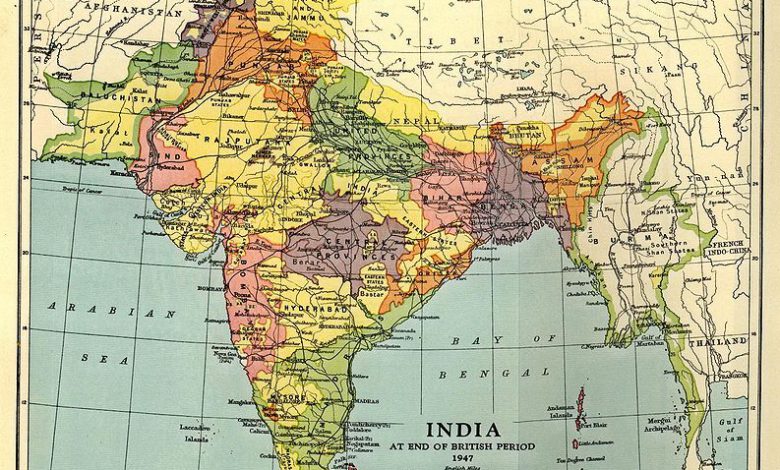
After the establishment of the Mughal dynasty in Iran and Mesopotamia (around 656), many Sadat families migrated to India and settled in northern India, from Punjab to the south.
Some of these immigrants had skills and trades, who not only managed their estates well, but also used their skills to help and support the local dehdars, who were mostly Hindu.
Most of the Sadat’s moved to the subcontinent during the throne of Delhi, ruler of the Mughal since 1530 from Iran (The Safavid dynasty of Iran from 1501 to 1736) and Iraq, mostly Persian speaking. They have secured high official and military ranks.
Large families of Sadat gradually settled in India.
In the meantime, Sadat Hadhramout (mainly from the lands of the Middle East and the entrance to Pars) were widely admired.
A huge community of ُSadat resides in and around Nanganallur, Chennai. which traces their lineage directly to the Sayyids of Iraq.
Marriage in most traditional Sadat families has been in the family, and if they married outside the family, they would choose a bride or groom from the Sadat families so that their children would be from both Sayyid parents, which is the so-called “Najib al-Tarfeen” ( be from Sayyid’s maternal and paternal families).
The Sayyid population in India estimated 7,017,000, with the biggest populaces in Uttar Pradesh (1,493,000). Maharashtra (1,108,000), Karnataka (766,000) Andhra Pradesh (727,000), Rajasthan (497,000), Bihar (419,000), West Bengal (372,000). Madhya Pradesh (307,000), Gujarat (245,000), Tamil Nadu (206,000), and 25,000 in Jammu and Kashmir.
Sayyids also found within the north-eastern state of Assam, where they locally moreover alluded to as Dawans.
Among the more urban families, exogamy is found with other categories such as Sheikh and Mughal, Gujjar, etc.
Historically, the Syeds of Uttar Pradesh were often large landowners.
Within the urban settlements, Syed families served as chaplains, educators, and administrators with British colonial professionals as the community tended to recruit.
Although the Sadat make up less than 3% of the Muslim population, they control a large portion of the financial resources. This segment of the society has an extremely high rate in terms of science and education.
Partition in 1947 created a traumatic situation for the society and many families were separated and moved to Pakistan. After that, the zamindari system was abolished, where the land was redistributed to Hindus and Sikhs who came to India from Pakistan.
Many Syed Families who remained in India are now medium and small Landlords in rural areas. And in urban areas, they moved towards modern jobs.
Among the Sadats of Punjab, Sadat Hosni (sons of Imam Hassan) have a special place; Other Sadats include Hosseini (relatives of Hossein), the most important of whom is Sadat Zaidi (relatives of Zayd bin Ali, grandson of Hossein); Sadat Razavi, (relatives of Ali Reza); And Sadat Naqvi and its sub-branches like their sub-branch Bukhari (relatives of Ali Al-Hadi) mentioned.
An outstanding number of Sayyids live in Tamil Nadu that generally concentrate within the cities. i.e Erwadi, Nagore, Madurai, and Kayalpattinam.
Badusha Sulthan Syed Ibrahim Shaheed of Ervadi, a Hussaini Syed traveled to South India within the center of the 12th century.
The title Levvai clan who live in Ervadi counted as Sayyids with the same single ancestor.
The decedents of ‘Shahul Hamid Abdul Qadir Badusha’ of Nagore lived there. They called with clan title of ‘Sahib or Saabu’ counted as Sayyids.
Kazi Syed Tajuddin the child of Mufti Jamaluddin al Ma’abari established the Kazimar. Enormous Mosque within the 13th century the primary mosque in Madurai may be a Hussaini Sadat.
His relatives (Syeds-Qazis-Huqdars) lived within the same Kazimar Road region within the center of Madurai city for over seven centuries. They oversee the Kazimar Huge Mosque built by their ancestors. Syed Tajuddin’s more youthful child Kazi Alauddin lived in Kayalpattinam.
The predecessor of the Bārha Sayyids, ‘Sayyid Abu’l Farah Al Hussaini Al Wasti’, cleared out his unique domestic in Wasit, Iraq; with his twelve children at the conclusion of the 13th century and moved to India, where they got four towns in Sirhind-Fatehgarh. By the 16th century, Abu’l Farah’s relatives had taken over Bārha towns in Muzaffarnagar.
In addition to these, we can also mention Sadat Zaidi Rasuldar, Termzi Zaidi who entered this country in different times..
The Sadat’s of Abdullapur Meerut relatives of extraordinary ‘Jalaluddin Surkh-Posh Bukhari’. They had an expansive Jagirdara comprising of 52 villages. ‘Abdullapur’ named after Syed Mir Abdulla Naqvi Al Bukhari, built the Kot Post of this put in the 16th century; it was his primary home.
Bukhari of Abdullapur fractionate into Kannauji Bukhari and Jalal Bukhari. Kannauji’s counted as relatives of ‘Jalaluddin Haider’ through ‘Syed Mehboob Alam’ or ‘Shah Jewna’; child of a warrior and chief advisor of ‘Sikandar Lodi’.
Syed Qudrat Naqvi Al Bukhari ; Auther of ‘Ghalib Kaun hai’, ‘Asaas-i-Urdu’, ‘Ghalib-i-sad rang’, ‘Seerat-un-Nabi; born here afterward relocated to Pakistan after parcel.
The Sayyids of Bilgram categorized as Hussaini Sayyids, their roots go back to Wasit, Iraq. Their precursor, Syed Mohammad Sughra, a Zaidi Sayyid of Iraq, arrived in India amid assist Sultan Iltutmish. In 1217–18 the family prevailed and settled in Bilgram.
An outstanding Sufi that had a place in a Sayyid family was Syed Salar Masud; from whom numerous of the Sayyid families of Awadh claim their heredity. Sayyids of Salon (Raebareli), Jarwal (Bahraich), Kintoor (Barabanki), and Zaidpur (Barabanki) were well-known Taluqadars (primitive masters) of Awadh province.
Sadaat also found in Kannauj trace their lineage from Hussein through ‘Ali al-Hadi, a branch of ‘Naqvi Bukhari’. Famous ‘Pir Syed Mehboob Alam Naqvi-ul Bukhari’ son of great warrior ‘Syed Sadaruddin Shah Kabeer Naqvi’; The holy person conjointly chief advisor; of Sikandar Lodi was moreover born in Kannauj and went through 66yrs of his life in ‘kannauj’. Afterward moved to Shah Jeewna. ‘Makhdoom Jahaniya’ Mosque still displays in Shikana,’ Kannauj’.
‘Nawab Siddiq Hasan Khan’ moreover from Kannauj. he may be a Bukhari Naqvi Sayyed changed over from Shi’a Islam to Sunni Islam within the early 1800s.
The most punctual movement of Sayyids from Afghanistan to North India took put in 1032. ‘‘ (common and brother-in-law of ‘Sultan Mahmud of Ghazni’) and his child ‘‘; set up their military central command at ‘‘ (16 km (9.9 mi) from Zaidpur) within the , Uttar Pradesh.
They are considered to be the primary Muslim pilgrims in North India. In 1033 ‘‘ was murdered at the fight of Bahraich, the area of his Border.
had no children. His parental uncle Syed Maroofuddin Ghazi and his family lived in Tijara until 1857 sometime recently they relocated to .
‘Syed Ahmed Rizvi Kashmiri’ and’ Khan Bahadur Aga Hussaini’ were both Rizvi Sayyids through ‘Aaqa Meer Sayyid Hussain Qomi Rizvi’. whose sacrosanct sanctum is within the Zainageer Town of Sopore, Kashmir.
Iraqi Sayyids or Iraqi brotherhood in Eastern Uttar Pradesh are relatives of Sayyid Masud Al Hussaini. They came to India from Iraq amid the rule of ‘Sultan Muhammad’ canister in 1330 A.D.
He settled with his seven children and forty warriors in (U.P.) A a few of them (i.e., ‘Syed Abu Bakr’ in , Ghazipur) changed over to Sunni Islam; within the rule of ‘‘ around 1517. His Shia relatives are presently known as Sayyids of .
Sayyids of , or Said Nagli, or the Baquari Syeds had relocated from ( Uzbekistan) amid the Sultanate period.
Sikandar Lodi was the ruler of Delhi when ‘Mir Syed Mohammad al Hussai Termezi’ ( Bagheri Syed) came to India and settled at .
The foremost critical figure within the history of the Sayyid in Uttar Pradesh was . He moved from Mashhad in Iran in 1549 and joined the court of the Mughal Sovereign Akbar. Akbar named Shustari as his chief equity, who utilized his position to fortify the status of the different Sayyid families.
They were favored in regulatory posts and shaped a favored tip top. When the Mughal Empire disintegrated, the Sayyid played a critical part within the turbulent legislative issues of the time.
The modern British colonial specialists that supplanted the Mughals. After the Fight of made a down-to-business choice to work with the different Sayyid .
Several Sayyid in Awadh were considerable landowners beneath the British colonial administration; numerous other Sayyid contributed to the state organization. After the annulment of the zamindari framework, numerous Sayyid (e.g. that of Ghazipur) had to take off their homes.
A diverse branch of Sayyid in Bihar following their family line to Iraq and Iran. The most conspicuous Sayyid of Bihar has been the relatives of Sufi holy people ‘‘ and ‘. Their tombs in are secured beneath the Archeological Study of India.
Sayyids were proprietors, judges, counselors, knowledgeable, respectful hireling, clerics, instructors, businessmen, and agriculturists. They have profoundly included in Bihari legislative issues sometime recently India’s autonomy; such as Bihar’s to begin with, prime serve Mohammad Yunus, a coordinate relative of Ibrahim Malik Baya; Most noticeable identities of Saadat of Bihar were from Desna, Bihar.
For Illustration Syed Mohammed Saeed Raza, Abdul Qavi Desnavi, and Sulaiman Nadvi. Desna’s library, set up in 1892, had thousands of ancient Persian and Urdu compositions.
After the segment of India, amid questionable times of mass displacement to Pakistan, the books were given to in Patna. Later a Desna area built up to house these treasures.
Most of the Sayyid / Syed families are descended from individuals invited by the Muslim rulers to serve as advisers and administrators. They granted land and properties to the Sadat.
During the period of (1458–1511), the sultan provided land to three ; and a grant to settle there after the victory of . In 1484 the sultan conquered the fort on 21 November 1484 and transferred his capital to . He completely rebuilt at the foothills of and named it Muhammadabad.
During Mughal rule in Gujarat (1570–1750), the Sayyid held the majority of the civil and ecclesiastical posts. For example, the Sayyids of , , invited to serve as administrators and judges by the Mughal Emperor, . They were provided land grants to settle there.
They comprised a significant portion of the Mughal army, many still live in old Muslim garrison towns like Ahmedabad. Many of the early Sufi saints that came to Gujarat belonged to Sayyid families; most of which came from Central Asia, Iran, Yemen, Oman, Basra, and Bahrain.
Kerala incorporates a 2,000-year-old affiliation with Arabia. In Malayalam, is a Muslim title that’s nearly comparable to Sayyid.
The present-day are gathered to be slipped from Sayyid families. They moved from Tarim, Hadhramaut, Yemen, amid the 17th century in arrange to proliferate Islam on the Malabar Coast. Sayyids chose coastal ranges to settle. The illustrious family of Arakkal in Kerala had beginnings.
There are numerous Syeds in Pakistan. Some of these Syeds first migrated to , , and , and then to South Asia. Many settled early in Khyber Pakhtunkhwa, Sindh, and Punjab.
There are many syeds of both Shia and Sunni sects of Islam. Amongst the famous Syeds who migrated to this region must mention ‘‘, who came to Multan, Punjab, around 1050 AD. His grandfather, ‘Syed Ali Qaswer’, a decedent of ‘Hazrat Imam Jafar Sadiq’, migrated from Baghdad and settled in Gardez, Afghanistan.
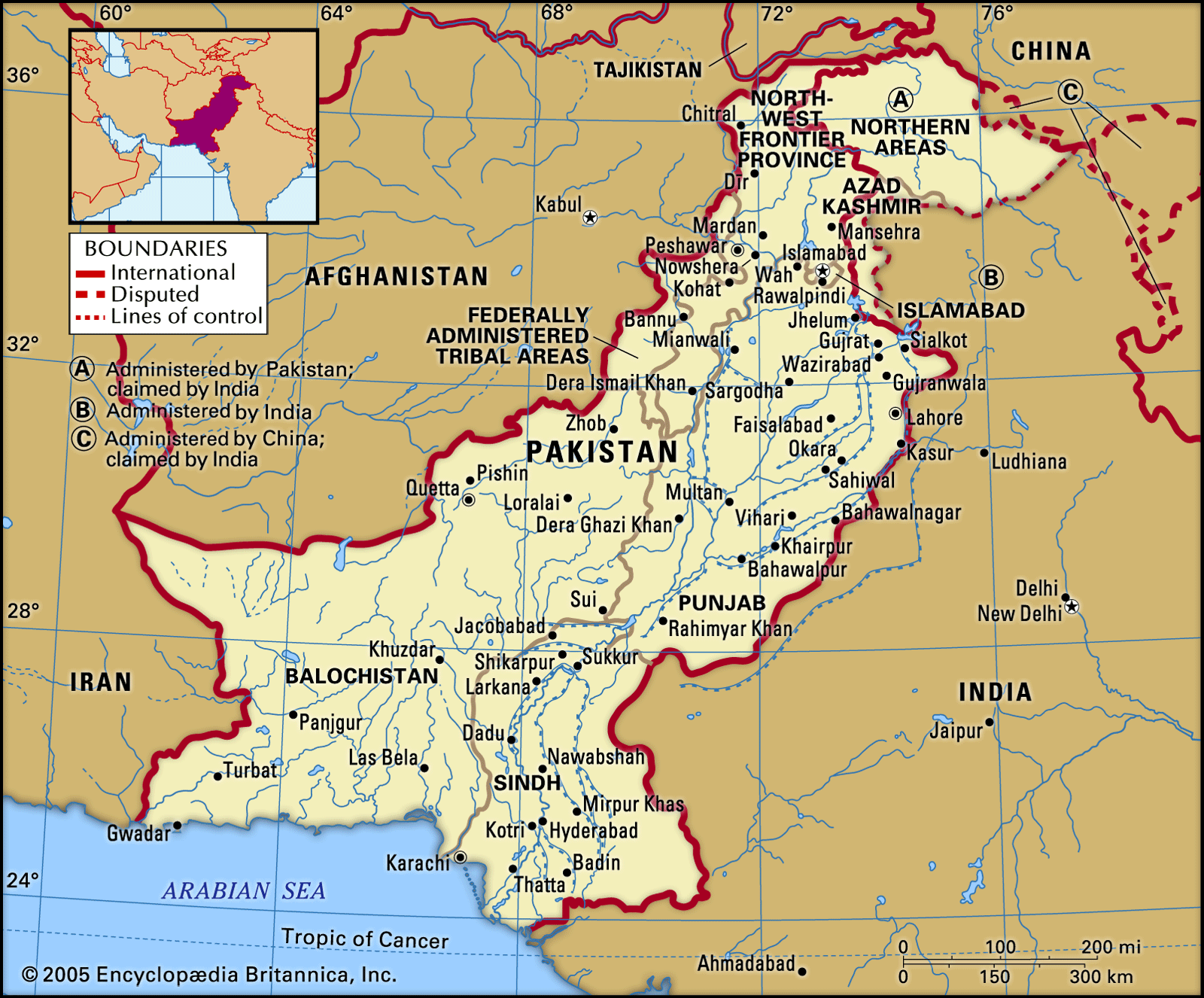
Other saints include , , , ; , , ; of khanqi Andrabi in Indian occupied Kashmir and Syed Muhammad Al-Makki.
Syeds of Pakistan are figured as the most prominent and well-established people of the country. A number of them have become popular and well-known religious icons, political leaders, and professionals. Furthermore, Pakistan currently holds the largest Syed population in all of South Asia. Syed also lives in Pakistan.
The Syeds from Sheraz, Iran migrated to Baluchistan and later to Sindh are known as Sherazi Syed. They live in Jacobabad and Thatta. The first Sherazi Syed to migrate from Baluchistan to Sindh was Malook Shah. He buried near Jacobabad city.
Another famous saint of Sindh ‘Mehr Shah’ was from the lineage of Malook Shah. MPA Aijaz Ali Shah and Ex-Provincial Secretary Arbab Ali Shah considered Sherazi Syed.
Based on the information received from “Syed Ameer Haider Sherazi” ,The Sherazi Sadat who migrated to sub-continent in 16th century was Sher Ali Sherazi buried near Dehli Darwaza in India. Sons of Sher Ali Sherazi was Shah Shams & Shah Jalal, who came to district Rampur Punjab (now known as Tehsil Shahpur Sargodha Punjab) with Mughal emperor Humayun. Shah Shams Sherazi settled in Rampur & Shah Jalal migrated to Afghanistan Jalalabad (city known on his name). Thats the reason, an outstanding number of this family residing in Sargodha, Bhalwal, Mandi Bahauddin, Sahiwal, Khanpur Sialkot, parachinar, Orakzai Agency, Kurram Agency and so on
The Tirmizis ,who settled in Pakistan, mostly descendants of the great Sufi spiritual saint Syed Ali Shah Tirmizi Pir Baba. Pir Baba’s grave and shrine in Bacha Killay village in the mountainous Buner District of present Khyber Pakhtunkhwa Pakistan. He is also known as “Shāh Kurassan” (“King of Kurassan”).
The total Sayyid population in Paksitan is 8,015,000 with the most of them are Bukhari (96,000), Husaini (39,000). Gharshin (34,000), Chishti (22,000), Taran (8,900), Kaheri (7,500), Mashwani (7,000), Ustrana (6,200), Qadiri (2,300) & Lakhiar (1,800).
This post is also available in:
with WPML


