
This post is also available in:
Sadat Zaidi dynasty
‘Al-Zaidi’ surname applies to direct descendant of the Holy Prophet (PBUH). ‘Al-Zaidi’s’ surname begins withZayd ibn Ali, son of ‘Ali ibn Hussain Zayn al-Abidin (AS)’, the ‘; All those whose lineage goes back to ‘Zayd ibn Ali (AS) are known as Zaidi Sadat.
Like many Arabs, the Zaidis lived in a tribal structure. The Zaidis migrated from Saudi Arabia to Iran and Iraq, and they still exist in these countries. From there, the Al-Zaidi tribe became popular in many parts of the Middle East and the Indian subcontinent.
Zaidi ul Waseti
After Apprising, his children and tribesmen either martyred or returned to the ‘Hejaz’ but many remained in Iraq. Those who remained in Iraq settled in ‘Wasit’ (which was popularly known as Ajam Iraq). Later, some of them moved from ‘Wasit’ to Iran, and then the Indian subcontinent.
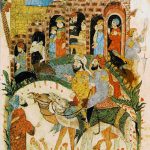
Sadat Zaidi went to India numerous times, and all the cases were invited by the rulers, elders, and people of different parts of India. Many of these migrations took place during the Humayon and earlier periods in India. Therefore, Zaidis of the Indian subcontinent known as Waseti.
Most of these Zaidis are part of the Twelver Shiites. But a number of them follow Sunni Islam. Many of them live in India and Pakistan.
Sadat Bharha
The largest group of Zaidis commonly known as “Saadat Bar”. “Saadat” typically means the generation of and Bara means twelve in Urdu. Many possible interpretations of the word about and about its current spelling: Bara, Bahreh, and Barha.
According to Tuzak Jahangiri, Akbar Nameh, and other Mongol sources and Bara means “clear” in Arabic. A possible explanation of the word Bara is that, as mentioned above, there were twelve villages in the area; and the inhabitants of this area known as Sadat Bara (twelve).
These Sayyids direct descendants of Abu Farah of Wasit (Iraq) in the late thirteenth century; along with their four sons, who were scattered in four villages of the Indian Punjab, namely Kandali, Chat Benwar, Tihanpur, and Jajner.
Those descendants of Zaid Shahid settled in twelve villages of through Seyyed Abul Farah ‘Wasati’.
Some of the survivors of Sayyid Mahmud Khan, commander of the great Indian emperor Akbar. They considered the most authoritative’Sadats’.
One of their provable reasons, according to a long tradition, the genealogy of Sayyid, documented and easily provable.
Jansath
located in Uttar Pradesh the north-western part of India, about 118 km from the National Capital of Delhi; part of Muzaffar Negar and has several ancient buildings from the time of the Mongols; including the house of the Syed Brothers, which is called “Rang Mahal”.
There are other old buildings such as Shish Mahal, Matieh Mahal, Badie, and Havili Chuti in Janatabad.
Jansath
was an attractive center during the family period. The Mongol rulers weakened later, and empire issues handled by the powerful Sadat. The most influential of them known as Sayyid Hassan Ali Khan (aka Abdullah Khan) and his brother Sayyid Hussein Ali Khan, the “kingmakers”.
attacked by the Mughals in 1739 and Sayyid Saifuddin Ali khan, the younger brother of Hassan and Hussain Ali Khan killed in the battle. His tomb located in Jansath at the western entrance of the town.
Khan Bahadur Syed Muzaffar Ali Khan, the first Chairman of the Shia Conference and the author of the book “” lives in Jansath.
Zaidi ul Wasiti Gardezi
Some descendants from Wasit then moved to the Indian subcontinent. These Zaidis believe in twelve Imams and are part of Twelver Shiism. Most of them settled in India and Pakistan.
Gardezi family name given when SYED ABUL FATEH (married with Syeda Fatima d/o Shah Yousuf Sani Gardezi at Multan. (During the era of Humayoun, the king of India)
Sadat Zaidi and subcontinent partition (independence)
After Pakistan’s independence, Most of Sadat Zaidi migrated to different parts of Pakistan, namely Lahore, Didar Singh Fort (Gujran Vala), Khyber Pakhtunkhwa, Sindh, Cheniot, Rawalpindi, and Karachi.
The children of Sadat Zaidi’s families have spread to other parts of the country, including Majerli in Karachi and Wah Cant.
In Karachi (Sindh), for example, the Jafar Tayyar Society, Ancholi, Razaviyeh Society, Abbas Town, some Sadat Zaidi also migrated from India to the Chenyut region of Punjab, Pakistan.
This post is also available in:


Very informative and helpful , I really appreciate this precious information.
Thanks for information, appreciate if you you provide details of Zaidi history, I need my children here in Houston to learn our history.
please visit
for information about Zaidi Sadat