This post is also available in:
During the historic Umayyad period and the Abbasid period until the end of the Mutawakkil caliphate, due to the oppression of Sadat, some of them hid their sovereignty or were forced to migrate to more distant places.
The massacre of Sadat by the direct order of Mu’awiyah, Yazid ibn Mu’awiyah, Marwan ibn Hakam, Obaidullah ibn Ziad, Hajjaj ibn Yusuf, as well as the Abbasids, are examples of the reason for their emigration.
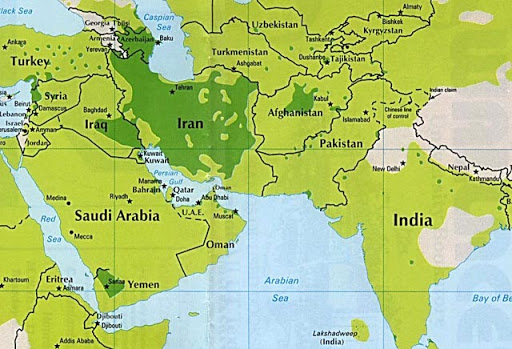
Iran, Central Asia, Yemen, the Syria and North Africa and many to Indian subcontinent are among the areas that Sadat has stalled over the centuries.
A significant numbers of the Alawi Sayyids who gradualy migrated to Southeast Asia were relatives of Ali ibn Husayn Zayn al-Abidin, particularly of Ba ‘Alawi sadat, numerous of which were relatives of vagrants from Hadhramaut.
Indeed, in spite of the fact, that they are affirmed relatives of Hussain, it is exceptional for the female Syed’s to be called Sayyidah; they are more commonly called Sharifah. Most of them live in Brunei, Indonesia, Malaysia, Singapore, Moro Area in Philippines, Pattani and Cambodia.
Numerous of the regal families of this locale such as the past illustrious families of the Philippines (Sultanate of Sulu, Sultanate of Maguindanao, Confederation of Sultanates of Ranao), Singapore (Sultanate of Singapore), Malaysia (Sultanates of Johor and Perlis), Indonesia (Sultanates of Siak, Pontianak, Gowa, a few Javanese Sultanates), and the existing regal family of Brunei (House of Bolkiah) are too Syeds, particularly of Ba’Alawi. A few common surnames of these Sayyids are al-Saqqaf, Shihab (or Shahab), al-Aidaroos, al-Habsyi (or al-Habshi), al-Kaff, al-Aththos, al-Haddad, al-Jufri (or al-Jifri), al-Muhdhar, al-Shaikh Abubakar, al-Qadri, al-Munawwar.
Africa
Africa Most of the Muslim history specialists claimed that three of the direct descendants of Ali ibn Abu Talib relocated into Somalia and Ethiopia. The two Ashrafs relocated to Ethiopia and the remaining syed settled in Somalia.
Ethiopia
Most of the Muslim history specialists and genealogists claimed that one of the Ashrafs called Hajji Ali moved into the southern portion of Ethiopia.
After he had relocated there, he got an infant and named him Gen-Silte. His children at that point called by their father’s title “Silte”. Agreeing on the Silte tribesmen, the father of Hajji Aliyye (Hajji Ali) was Hajji Omar container Osman, who was a Middle easterner.
He decieded to live in Hijaz, presently portion of Saudi Arabia. He relocated to Harar to begin with, at that point settled within the southern portion of Omnan which is presently a portion of Silte.
Libya
Further information: List of Ashraf tribes in Libya
The Syeds in Libya are Sunni, counting the previous regal family, which is initially Zaidi-Moroccan (moreover known as the Senussi family).
The El-Barassa Family are Ashraf as claimed by the children of Abdulsalam ben Meshish, a relative of Hassan canister Ali container Abi Talib.
Middle East
Men having a place to the Syed families or tribes within the Middle easterner world used to wear white or ivory coloured knifes like , khanjars or shibriyas to differentiate their respectability among other Middle easterner men, in spite of the fact that this custom has been limited due to the nearby laws of the differently separated Middle easterner nations.
Wearing turbans of different colours, particularly white, dark, green, yellow, orange, or maroon is done as a substitute and polished more by non-Arab Syeds than their Middle easterner partners.
Iraq
The Syed families in Iraq are so various that there are books composed particularly to list the families and interface their trees.
A few of these families are: the Alyassiri, Al Aqeeqi, Al-Nasrullah, Al-Wahab, Al-Hashimi, Al-Quraishi, Al-Witry, Al-Obaidi, Al-Mayali, Al-Samarai, Al-Zaidi, Al-A’araji, Al-Baka, Al-Hasani, Al-Hussaini, Al-Shahristani, Al-Qazwini Al-Qadri, Tabatabaei, Al- Alawi, Al-Ghawalib (Al-Ghalibi), Al-Musawi, Al-Awadi (not to be confounded with the Al-Awadhi Huwala family), Al Gharawi, Al-Sabzewari, Al-Shubber, Al-Hayali, Al-Kamaludeen and numerous others.
Iran
Syeds (in Persian: سید Seyyed) are found in vast numbers in Iran. The Chief of “National Organization for Civil Registration” of Iran declared that more than 6 million of Iranians are Syed. The majority of Sayyids migrated to Iran from Arab lands predominantly in the 15th to 17th centuries during the Safavid era.
The Safavids transformed the religious landscape of Iran by imposing Twelver Shiism on the populace. Since most of the population embraced Sunni Islam, and an educated version of Shiism was scarce in Iran at the time, Ismail imported a new group of Shia Ulama who predominantly were Sayyids from conventional Shiite centers of the Arabic-speaking lands, such as Jabal Amel (of southern Lebanon), Syria, Bahrain, and southern Iraq in arrange to make a state clergy.
The Safavids advertised them arrive and cash in return for dependability. These researchers instructed Twelver Shiism, made it available to the populace, and enthusiastically energized change to Shiism.
mid the rule of Shah Abbas the Incredible, the Safavids moreover imported to Iran more Middle easterner Shias, overwhelmingly Sayyids, built devout teach for them, counting numerous Madrasas (devout schools), and effectively induced them to take part within the government, which they had avoided within the past
Common Syed family surnames in Iran are Husseini, Mousavi, Kazemi, Razavi, Eshtehardian, Tabatabaei, Hashemi, Hassani, Jafari, Emami, Ahmadi, Ladjevardi, Zaidi, Imamzadeh, Sherazi, Kermani (kirmani), Shahidi, and Mahdavi.
Oman
In Oman, Syed is utilized by individuals of the Al Said administering regal family. The outright ruler of the nation holds the title Sultan with individuals of the illustrious family qualified for progression to the position of royalty given the title Sheik, these may moreover utilize the title Sayyid ought to they wish to, in spite of the fact that as Sheik supersedes this, it isn’t a broadly utilized hone.
Individuals of the expanded family or individuals by marriage carry the title Syed/Sayyid or Sayyida for a female. Such titles in Oman are genetic through fatherly heredity or in a few uncommon circumstances, such as an privileged title given by regal proclaim.
Individuals of the Al Said family utilize the term Syed/Sayyid soley as a title and not as a implies of demonstrating plunge, as the Al Said regal family does not slip from Banu Hashim or from Imam Ali and instep slips from the Qahtanite Zahran tribe.
Yemen
In Yemen the Syed/Sayyids are more by and large known as sadah; they are moreover alluded to as Hashemites. In general terms they are Shia, Sunni, and Sufi.
Sayyid families in Yemen incorporate the Rassids, the Qasimids, the Mutawakkilites, the Hamideddins, a few Al-Zaidi of Ma’rib, Sana’a, and Sa’dah, the Ba ‘Alawi sada families in Hadhramaut, Al-Wazir of Sana’a, Al-Shammam of Sa’dah, the Sufyan of Juban, and the Al-Jaylani of Juban.
South Asia
Although people in South Asia claim Hashemite descent, genealogy family trees are studied to authenticate claims. In 1901 the total number of Sayyids in British India was counted as 1,339,734.
History of South Asian Sayyids
Syed/Sayyids relocated numerous centuries prior from diverse parts of the Center East and Central Asia (Turkestan) amid the intrusion of the Mongols, Ghaznavid line, Delhi Sultanate, and Mughal Domain, including a timespan of generally until the late 19th century.
Syed/Sayyids relocated to Sindh, Uch, and Attock Khurd (Punjab) within the north and settled there exceptionally early. Other early vagrant Sayyids moved profound into the south to the Deccan sultanates found within the Deccan Level locale within the time of the Bahmani Sultanate, and afterward Golkonda, Nizam Shahi of Ahmednagar, Bijapur, Bidar, and Berar.
A few gone by India as dealers or gotten away from the Abbasid, Umayyad and Safavid. Their names show up in Indian history at the disintegration of the Mughal Realm, when the Sayyid brothers made and ousted heads at their will (1714–1720). The primary Muslims named to the Board of India and the primary named to the privy chamber were both Syed / Sayyids.
Afghanistan
In Afghanistan, Sadat is recognized as an ethnic group. On 13 Walk 2019, tending to the Sadat gathering at the presidential royal residence (Arg), President Ashraf Ghani said that he will issue a proclaim on the consideration of Sadat ethnic gather in unused electronic national character card (e-NIC).
President Ashraf Ghani proclaimed specifying ‘Sadat tribe’ within the electronic national personality on 15 Walk 2019. Syed/Sayyids of the north are by and large found in Balkh and Kunduz; whereas within the east they can be found in Nangarhar. Whereas most are Sunni Muslims, a few within the Bamiyan territory are to Shi’a.
The Subcontinent (India and Pakistan)
The full Sayyid populace in India is 7,017,000, with the biggest populaces in Uttar Pradesh (1,493,000), Maharashtra (1,108,000), Karnataka (766,000), Andhra Pradesh (727,000), Rajasthan (497,000), Bihar (419,000), West Bengal (372,000), Madhya Pradesh (307,000), Gujarat (245,000), Tamil Nadu (206,000), and 25,000 in Jammu and Kashmir. Syed /Sayyids are too found within the north-eastern state of Assam, where they are locally moreover alluded to as Dawans.
In India, Syeds of Hadramawt (who started primarily from the Middle eastern Landmass and the Persian Inlet) picked up far reaching acclaim. There’s a enormous community of Syeds settled in and around the Nanganallur locale in Chennai that follow their parentage straightforwardly to the Syeds of Iraq. Traditional Syed families once in a while wed exterior their community, and underscore wedding into “Najeeb-ul-Tarafain” نجیب الطرفیت (of Sayyid plummet from both the mother’s and father’s side) families.
Among the more urbanized families, with an increase in exogamy with other bunches such as the Shaikh and Mughals. Historically, the Sayyids of Uttar Pradesh were significant landowners, frequently truants, and this was particularly the case with the Awadh taluqdars.
Within the urban townships, Sayyid families served as clerics, instructors, and directors with the British colonial specialists given the community a inclination in enlistment.
In spite of the fact that they account for less than 3% of Muslim populace, they control a larger part of financial resources. The community too incorporates a exceptionally tall education rate. The freedom and parcel of India in 1947 was traumatic for the community, with numerous families getting to be partitioned and a few moving to Pakistan. This was taken after by the annulment of the zamindari system, where arrive was redistributed to those who till the arrive. Many Syeds /Sadat who remained on the arrive are presently medium and little scale agriculturists, whereas in urban regions, there has been a move towards advanced occupations.
The Sadat of Punjab have a place to the Hasani (relatives of Hasan), Husaini (relatives of Husayn), Zaidi (relatives of Zayd ibn Ali, grandson of Husayn), Rizvi, (relatives of Ali al-Ridha), and Naqvi and their sub-caste Bukhari (relatives of Ali al-Hadi).
North India
The most punctual movement of Sayyids from Afghanistan to North India took put in 1032 when Gazi Saiyyed Salar Sahu (common and brother-in-law of Sultan Mahmud of Ghazni) and his child Ghazi Saiyyad Salar Masud set up their military central command at Satrikh (16 km (9.9 mi) from Zaidpur) within the Barabanki locale of Uttar Pradesh. They are considered to be the primary Muslim pilgrims in North India. In 1033 Ghazi Saiyyad Salar Masud was murdered at the fight of Bahraich, the area of his mazr. Ghazi Saiyyad Salar Masud had no children. His parental uncle Syed Maroofuddin Ghazi and his family lived in Tijara until 1857 some time recently they relocated to Bhopal. Syed Ahmed Rizvi Kashmiri and Khan Bahadur Aga Syed Hussain were both Rizvi Sayyids through Aaqa Meer Sayyid Hussain Qomi Rizvi, whose sacrosanct sanctum is within the Zainageer Town of Sopore, Kashmir. Iraqi Sayyids or Iraqi biradri in Eastern Uttar Pradesh are relatives of Sayyid Masud Al Hussaini who was the coordinate relative of Prophet’s grandson Hussain ibn Ali and came to India from Iraq amid the rule of Sultan Muhammad canister Tughlaq in 1330 A.D. He settled with his seven children and forty champions in Ghazipur (U.P.) as a few of them (i.e., Syed Abu Bakr in Nonahra, Ghazipur) changed over to Sunni Islam within the rule of Sultan Ibrahim Lodhi around 1517. His Shia relatives are presently known as Sayyids of Ghazipur.
Sayyids of Syed nagli, or Said Nagli, or the Baquari Syeds had relocated from Termez (Display day Uzbekistan)[81] amid the Sultanate period. Sikandar Lodi was the ruler of Delhi when Mir Syed Mohammad al Hussain al Hussaini al Termezi Haji al Haramain came to India and settled at Syed Nagli. He was a Baquari Syed who drew his ancestry from Muhammad al Baqir.
Maybe the foremost critical figure within the history of the Sayyid in Uttar Pradesh was Sayyid Basrullah Shustari, who moved from Mashad in Iran in 1549 and joined the court of the Mughal Sovereign Akbar. Akbar named Shustari as his chief equity, who utilized his position to fortify the status of the different Sayyid families. They were favored in regulatory posts and shaped a favored tip top. When the Mughal Empire disintegrated, the Sayyid played an critical part within the turbulent legislative issues of the time. The modern British colonial specialists that supplanted the Mughals after the Fight of Buxar made a down to business choice to work with the different Sayyid jagirdars.
Several Sayyid taluqdars in Awadh were considerable landowners beneath the British colonial administration, and numerous other Sayyid contributed to state organization. After the annulment of the zamindari framework, numerous Sayyid zamindars (e.g. that of Ghazipur) had to take off their homes.
Uttar Pradesh
The predecessor of the Bārha Sayyids, Sayyid Abu’l Farah Al Hussaini Al Wasti, cleared out his unique domestic in Wasit, Iraq, with his twelve children at the conclusion of the 13th century and moved to India, where he gotten four towns in Sirhind-Fategarh. By the 16th century Abu’l Farah’s relatives had taken over Bārha towns in Muzaffarnagar.
The Sayyeds of Abdullapur Meerut are relatives of extraordinary holy person Jalaluddin Surkh-Posh Bukhari. They had a expansive Jagirdara comprising of 52 villages.Abdullapur named after Syed Mir Abdulla Naqvi Al Bukhari, he built Kot Post of this put in 16th century, it was his primary home. Bukhari of Abdullapur are fractionate into Kannauji Bukhari and Jalal Bukhari. Kannauji’s are relatives of Jalaludin Haider through Syed Mehboob Alam Naqvi-ul Bukhari Al-Maroof Shah Jewna or Shah Jewna child of warrior and chief advisor of Sikandar Lodi. Celebrated author Syed Qudrat Naqvi Al Bukhari was born here afterward relocated to Pakistan after parcel, his popular books are Ghalib kaun hai, Asaas-i-Urdu, Ghalib-i-sad rang, Seerat-un-Nabi, Hindi-Urdu lughat, Mutal’a-i-Abdul Haq, Lisani maqalaat.
The Sayyids of Bilgram are Hussaini Sayyids, who to begin with moved from Wasit, Iraq, within the 13th century. Their precursor, Syed Mohammad Sughra, a Zaidi Sayyid of Iraq, arrived in India amid the run the show of Sultan Iltutmish. In 1217–18 the family prevailed and settled in Bilgram. A outstanding Sufi that had a place to a Sayyid family was Syed Salar Masud, from whom numerous of the Sayyid families of Awadh claim their heredity. Sayyids of Salon (Raebareli), Jarwal (Bahraich), Kintoor (Barabanki), and Zaidpur (Barabanki) were well-known Taluqadars (primitive masters) of Awadh province.Sadaat also found in Kannauj trace their lineage from Husayn through Ali al-Hadi, a branch of Naqvi Bukhari. Famous Pir Syed Mehboob Alam Naqvi-ul Bukhari Al-Maroof Shah Jewna son of great warrior Syed Sadaruddin Shah Kabeer Naqvi (holy person conjointly chief advisor )of Sikandar Lodi was moreover born in Kannauj and went through 66yrs of his life in kannauj afterward moved to Shah Jeewna. Makhdoom Jahaniya Mosque is still display in Shikana,Kannauj. Nawab Siddiq Hasan Khan was moreover from Kannauj, he may be a Bukhari Naqvi Sayyed changed over from Shi’a Islam to Sunni Islam within the early 1800s.
Gujarat
In Gujarat, most of the Sayyid families are descended from individuals invited by the Muslim rulers of Gujarat to serve as advisers and administrators, and were granted jagirs.[citation needed] During the period of Sultan Mahmud Begada (1458–1511), the sultan provided land to three Sayyid brothers and a grant to settle there after the victory of Pavagadh Fort. In 1484 the sultan conquered the fort on 21 November 1484 and transferred his capital to Champaner, which he completely rebuilt at the foothills of the Pavagadh Fort and named it Muhammadabad. During Mughal rule in Gujarat (1570–1750), the Sayyid held the majority of the civil and ecclesiastical posts. For example, the Sayyids of Thasra, Kheda district, were invited to serve as administrators and judges by the Mughal Emperor, Aurangzeb, and were provided land grants to settle there. They also comprised a significant portion of the Mughal army, and many are still found in old Muslim garrison towns like Ahmedabad. Many of the early Sufi saints that came to Gujarat belonged to Sayyid families, most of which came from Central Asia, Iran, Yemen, Oman, Basra, and Bahrain.
Bihar
There are diverse bunches of Sayyids in Bihar following their family line to Iraq and Iran.The most conspicuous Sayyids of Bihar have been the relatives of Sufi holy people Sharafuddin Maneri and Malik Ibrahim Bayu. Their tombs in Bihar Sharif are secured beneath the Archeological Study of India. In Bihar, Sayyids were proprietors, judges, counselors, knowledge, respectful hireling, clerics, instructors, businessmen and agriculturists. They were profoundly included in Bihari legislative issues some time recently India’s autonomy, such as Bihar’s to begin with prime serve Mohammad Yunus, a coordinate relative of Ibrahim Malik Baya
Most noticeable identities of Saadat of Bihar were from Desna, Bihar. For Illustration Syed Mohammed Saeed Raza, Abdul Qavi Desnavi [109] and Sulaiman Nadvi. Desna’s library, set up in 1892, had thousands of ancient Persian and Urdu compositions. After the segment of India, amid questionable times of mass displacement to Pakistan, the books were given to Khuda Bakhsh Khan Library in Patna, where a Desna area was built up to house these treasures.
South India
Kerala
Kerala incorporates a 2,000-year-old affiliation with Arabia. In Malayalam, Thangal is an honorific Muslim title that’s nearly comparable to Sayyid and is given to guys whom are accepted to be relatives of Muhammad. The present-day Thangals are gathered to be slipped from Sayyid families who moved from the memorable city of Tarim, within the Hadhramaut Area, Yemen, amid the 17th century in arrange to proliferate Islam on the Malabar Coast. Sayyids chosen coastal ranges to settle. The illustrious family of Arakkal in Kerala had Thangal beginnings.
Tamil Nadu
There are a outstanding number of Sayyids in Tamil Nadu that generally concentrate within the cities like Erwadi, Nagore, Madurai, and Kayalpattinam. Badusha Sulthan Syed Ibrahim Shaheed of Ervadi, a Hussaini relative of Mohammed and a ruler of Madinah, travelled to South India within the center of the 12th century. His relatives who live in Ervadi with the clan title Levvai are from a single ancestor and are Sayyids. The beneficiaries of Shahul Hamid Abdul Qadir badusha of Nagore who live there and are called with clan title of Sahib or Saab or Saabu are Sayyids. Kazi Syed Tajuddin the child of Mufti Jamaluddin al Ma’abari who established the Kazimar Enormous Mosque within the 13th century the primary mosque in Madurai may be a Hussaini relative of Prophet Mohammed and subsequently have a place to Syed family.
Until as of late, his relatives (Syeds-Qazis-Huqdars) lived within the same Kazimar Road region within the center of Madurai city for over seven centuries and overseen the Kazimar Huge Mosque built by their ancestor. Syed Tajuddin’s more youthful child Kazi Alauddin lived in Kayalpattinam and his sanctum is found there.
Pakistan
There are numerous Syeds in Pakistan. Some of these Syeds first migrated to , , and , and then to South Asia. Many settled early in Khyber Pakhtunkhwa, Sindh, and Punjab.
There are many syeds of both Shia and Sunni sects of Islam. Amongst the famous Syeds who migrated to this region must mention ‘‘, who came to Multan, Punjab, around 1050 AD. His grandfather, ‘Syed Ali Qaswer’, a decedent of ‘Hazrat Imam Jafar Sadiq’, migrated from Baghdad and settled in Gardez, Afghanistan.
Other saints include , , , ; , , ; of khanqi Andrabi in Indian occupied Kashmir and Syed Muhammad Al-Makki.
Syeds of Pakistan are figured as the most prominent and well-established people of the country. A number of them have become popular and well-known religious icons, political leaders, and professionals. Furthermore, Pakistan currently holds the largest Syed population in all of South Asia. Syed also lives in Pakistan.
The Syeds from Sheraz, Iran migrated to Baluchistan and later to Sindh are known as Sherazi Syed. They live in Jacobabad and Thatta. The first Sherazi Syed to migrate from Baluchistan to Sindh was Malook Shah. He buried near Jacobabad city.
Another famous saint of Sindh ‘Mehr Shah’ was from the lineage of Malook Shah. MPA Aijaz Ali Shah and Ex-Provincial Secretary Arbab Ali Shah considered Sherazi Syed.
The Sherazi Sadat who migrated to sub-continent in 16th century was Sher Ali Sherazi buried near Dehli Darwaza in India. Sons of Sher Ali Sherazi was Shah Shams & Shah Jalal, who came to district Rampur Punjab (now known as Tehsil Shahpur Sargodha Punjab) with Mughal emperor Humayun. Shah Shams Sherazi settled in Rampur & Shah Jalal migrated to Afghanistan Jalalabad (city known on his name). Thats the reason, an outstanding number of this family residing in Sargodha, Bhalwal, Mandi Bahauddin, Sahiwal, Khanpur Sialkot, parachinar, Orakzai Agency, Kurram Agency and so on
The Tirmizis ,who settled in Pakistan, mostly descendants of the great Sufi spiritual saint Syed Ali Shah Tirmizi Pir Baba. Pir Baba’s grave and shrine in Bacha Killay village in the mountainous Buner District of present Khyber Pakhtunkhwa Pakistan. He is also known as “Shāh Kurassan” (“King of Kurassan”).
The total Sayyid population in Paksitan is 8,015,000 with the most of them are Bukhari (96,000), Husaini (39,000). Gharshin (34,000), Chishti (22,000), Taran (8,900), Kaheri (7,500), Mashwani (7,000), Ustrana (6,200), Qadiri (2,300) & Lakhiar (1,800).

Withdrawal
This post is also available in: فارسی اردو Withdrawal form Complete and submit this form only if you wish to withdraw from your contract. Required fields are marked with an asterisk (*). To: Syed Mehdi Zaidi Name * Email address * Goods or service being withdrawn * Address Order or contract reference Order date Additional …
Terms and Conditions
This post is also available in: فارسی اردو The Terms and Conditions were last updated on October 27, 20261. IntroductionThese Terms and conditions apply to this website and to the transactions related to our products and services. You may be bound by additional contracts related to your relationship with us or any products or services that …
Password Reset
This post is also available in: فارسی اردو This post is also available in: فارسی اردو
Account
This post is also available in: فارسی اردو This post is also available in: فارسی اردو
This post is also available in: