This post is also available in:
Hazrat Fatima Zahra the mother of the Sadat
Fatima Zahra, In the History of Islamic history, few figures shine with the profound and enduring light of Hazrat Fatima Zahra (SA). As the beloved daughter of the Final Prophet, Muhammad (PBUH), and the wife of the first Imam, Ali (AS), her life represents the sacred bridge between Prophethood and Imamate.
Yet, for all her esteemed titles—Az-Zahra, As-Siddiqah, Sayyidatun Nisa al-Alamin—her most pivotal role for humanity is as the mother of the Sadat. From her noble lineage, carried through her sons Al-Hasan and Al-Husayn (AS), flows the pure stream of the Ahl al-Bayt, blessing the world with generation upon generation of noble descendants. This article delves into her complete life, exploring how the Prophet’s daughter became a timeless beacon of faith, resistance, and the mother of the Sadat for all time.
Hazrat Fatima (Peace Be Upon Her)
Hazrat Fatima (Peace Be Upon Her), the daughter of the Prophet Muhammad (Peace Be Upon Him and His Progeny), was the most beloved person to the Messenger of God. She is the third Infallible and one of the five holy women of the world.
Her most famous title is “Zahra.” Her kunya was Umm Abiha. She is also the daughter of an Infallible, the wife of an Infallible, and the mother of Infallibles. Finally, after the passing of her honorable father, the oppression suffered by her husband, and the loss of her right, Fatima’s soul and body were deeply wounded, leading to her martyrdom. According to her will, she was buried at night, in secret, to the extent that the location of her noble grave remains unknown.
Names, Titles, and Kunyas
Many titles for her have been mentioned in sources. In a hadith from Imam Sadiq (AS), it is stated: “For Fatima, near God Almighty, there are nine names: Fatima, Siddiqah, Mubarakah, Tahirah, Radiyah, Mardiyah, Muhaddithah, Zahra.”
The Meaning of Fatima
The Prophet Muhammad (Peace Be Upon Him and His Progeny) named her Fatima. The word “Fatima” is an active participle derived from the root “F-T-M.” “Fatama” in Arabic means to wean, cut off, and separate. Regarding the reason for this naming, a hadith from the Prophet (Peace Be Upon Him and His Progeny) states:
«إنّ اللّهَ عَزَّوَجَلَّ فَطمَ ابْنَتِی فاطِمَة وَ وُلدَها وَمَنْ أَحَبًّهُمْ مِنَ النّارِ فَلِذلِک سُمّیتْ فاطِمَة»
“Indeed, Allah, the Mighty and Majestic, has weaned my daughter Fatima and her children and those who love them from the Fire; for this reason, she was named Fatima.”
Elsewhere, the reason for naming her Fatima was stated as her being separated and cut off from all evil.
Titles and Kunyas
Among her titles, “Zahra” is the most famous and is often mentioned with her name (Fatima al-Zahra). Zahra is the feminine form of Azhar, meaning: radiant, one who has a shining face, one who has a pure and white complexion, the shining moon.
Imam Sadiq (AS) was asked, “Why was Fatima named Zahra?” He said: “Because Fatima was such that when she stood in the mihrab, a light from her would shine for the people of heaven, just as the stars shine for the people of earth.”
Among her titles that indicate her very lofty status is Sayyidat Nisa’ al-Alamin (The Mistress of the Women of the Worlds), which the Prophet Muhammad (PBUH) used to call her.
Some of her kunyas include: Umm al-Hasan, Umm al-Husayn, Umm al-Muhsin, Umm al-A’immah, Umm Abiha, Umm al-Khayrah, Umm al-Mu’minin, Umm al-Akhyar, Umm al-Fada’il, Umm al-Azhar, Umm al-‘Ulum, Umm al-Asma’.
The mother of the Sadat

In the annals of Islamic history, few figures shine with the profound and enduring light of Hazrat Fatima Zahra (SA). As the beloved daughter of the Final Prophet, Muhammad (PBUH), and the wife of the first Imam, Ali (AS), her life represents the sacred bridge between Prophethood and Imamate.
Yet, for all her esteemed titles—Az-Zahra, As-Siddiqah, Sayyidatun Nisa al-Alamin—her most pivotal role for humanity is as the mother of the Sadat. From her noble lineage, carried through her sons Al-Hasan and Al-Husayn (AS), flows the pure stream of the Ahl al-Bayt, blessing the world with generation upon generation of noble descendants. This article delves into her complete life, exploring how the Prophet’s daughter became a timeless beacon of faith, resistance, and the mother of the Sadat for all time.
Biography of Hazrat Fatima
Birth
Narrations concerning the year of Hazrat Zahra’s (AS) birth are numerous and varied, but three are most prominent: five years before Bi’that (the beginning of the Prophet’s mission), the second year of Bi’that, and the fifth year of Bi’that. Sheikh Tusi, while mentioning the occasions of the month of Jumada al-Thani, wrote:
“According to some narrations, the 20th of Jumada al-Thani in the second year after Bi’that is the birth of Fatima (AS), and in another narration, the fifth year is mentioned. The ‘Ammah (Ahl al-Sunnah) narrate that her birth was five years before Bi’that.”
As Sheikh Tusi said, the famous opinion among Sunni historians is five years before Bi’that, with some specifying it coincided with the year of the reconstruction of the Ka’bah, i.e., five years before Bi’that.
Among Shia scholars, Sheikh Mufid considered her birth to be in the second year of Bi’that, and al-Kaf’ami also preferred this opinion. This opinion agrees with a narration that al-Hakim al-Nishaburi from Sunni scholars accepted in his book Al-Mustadrak, citing Imam Ja’far al-Sadiq (AS): “Fatima passed away at the age of 21 and was born when the Prophet (PBUH) was 41 years old.”
Other opinions
The third opinion, which seems to be the most famous among Shia scholars (and some Sunni scholars also hold it), and several narrations support it, considers the fifth year after Bi’that as the time of her birth.
Among these opinions, the opinion of five years before Bi’that cannot be accepted for the following reasons:
-
Historians have said that all of Khadija’s (AS) children were born after Bi’that.
-
Al-Nasa’i narrated that when Abu Bakr and Umar proposed to Fatima (AS), the Prophet (PBUH) rejected them with the excuse that Fatima was young. If the Sunni claim that Fatima (AS) was born five years before Bi’that were correct, then her age at the time of the proposal, which all historians agree was after the Hijrah, would have been about eighteen or nineteen, and someone of that age is not called “young.”
Divine tidings ,
According to some narrations, before the conception of Hazrat Zahra (SA), the Messenger of God (PBUH) was commanded by God to distance himself from Hazrat Khadija (SA) for forty days and nights, secluding himself in a place. He spent these days in fasting and worship. At the end of this forty-day seclusion, Gabriel descended upon the Messenger of God and, bringing with him food from Paradise, said to the Prophet: “Break your fast with this food I have brought for you by God’s command.” So the Messenger of God broke his fast with that food, and after breaking his fast, he went to Khadija’s house, and that very night, the pure progeny of Fatima was conceived.
Blessed progeny
In a narration, it is stated that the Messenger of God (PBUH) said to Khadija during her pregnancy with Hazrat Fatima (SA): “O Khadija! Gabriel has given me the glad tidings that she is a girl, and he said that she is the source of a pure and blessed progeny, and God Almighty has decreed that my progeny shall continue through her, and He has appointed her descendants, after the cessation of revelation, to be Imams and Caliphs of God on earth.”
In the annals of Islamic history, few figures shine with the profound and enduring light of Hazrat Fatima Zahra (SA). As the beloved daughter of the Final Prophet, Muhammad (PBUH), and the wife of the first Imam, Ali (AS), her life represents the sacred bridge between Prophethood and Imamate.
Yet, for all her esteemed titles—Az-Zahra, As-Siddiqah, Sayyidatun Nisa al-Alamin—her most pivotal role for humanity is as the mother of the Sadat. From her noble lineage, carried through her sons Al-Hasan and Al-Husayn (AS), flows the pure stream of the Ahl al-Bayt, blessing the world with generation upon generation of noble descendants. This article delves into her complete life, exploring how the Prophet’s daughter became a timeless beacon of faith, resistance, and the mother of the Sadat for all time.
Hazrat Zahra During the Time of the Prophet
In Mecca:
The life of Hazrat Fatima (SA) from early childhood was mixed with many hardships, sufferings, and difficulties. Not more than two years had passed from Hazrat Zahra’s (SA) life when the Quraysh decided to kill the Messenger of God (PBUH). When Abu Talib learned of this decision, he asked the Banu Abd al-Muttalib to enter the Shi’b (valley) of Abu Talib and defend the life of the Messenger of God (PBUH). They went to the Shi’b except for Abu Lahab and Abu Sufyan bin al-Harith bin Abd al-Muttalib. In reaction to this move, the Quraysh cut off economic, social, and familial ties with them. This siege lasted for three years. According to historical reports, those inside the Shi’b were in a difficult situation; they were unable to meet their needs, and the Quraysh had blocked the entry of food and water to them.
Demise of Hazrat Khadija
In the tenth year after Bi’that, after the Banu Hashim left the Shi’b of Abu Talib and their situation was improving, Hazrat Abu Talib (AS) passed away, and a few days later, when Hazrat Fatima (SA) was not more than five years old, her mother, Hazrat Khadija (SA), passed away. In a narration, it is mentioned that before the burial, the Prophet (PBUH) descended into her grave while Fatima was holding onto her father’s garment, circling around him and asking, “Father, where is my mother?” The Prophet left her question unanswered. She went to others asking about her affectionate mother. At that moment, Gabriel descended and informed the Prophet: “Your Lord commands you to convey our greetings to Fatima and tell her: Her mother Khadija is now in the beautiful and lush Paradise of God… and she is next to Asiya and Maryam, the daughter of Imran, the mother of Christ.” The Prophet embraced Fatima, showed her affection, and conveyed God’s message to her.
harsh life after Khadija
After the demise of Hazrat Khadija, the years of the Prophet’s presence in Mecca were filled with harassment, insults, and the continuous efforts of the enemies to erase Islam and the Muslims. Sometimes the heartless enemies would throw dust or ashes on the head of the Prophet (PBUH). When the Prophet returned home, Fatima (AS) would clean the dust and ashes from her father’s head and face while tears welled in her eyes. The Prophet would say: “My daughter, do not be sad and do not cry, for God is the protector and guardian of your father.”
It is narrated that the enemies gathered in the Hijr Ismail and swore by the idols that wherever they found Muhammad, they would kill him. Fatima heard this news and informed her father so he would take more care.
Supporting her Father , the Prophet
In Sahih al-Bukhari, it is mentioned: Abu Jahl incited a group of ruffians from Mecca to bring a sheep’s placenta and throw it on the Prophet’s head while he was prostrating in the Masjid al-Haram. When this was done, Abu Jahl and his companions burst into laughter and mocked the Prophet. Some companions saw the scene but were unable to defend him due to the readiness of the merciless enemy. This news reached his young daughter Fatima (AS). She quickly came to the Masjid al-Haram and, with her special courage, punished Abu Jahl and his companions with the sword of her tongue and cursed them.
In the annals of Islamic history, few figures shine with the profound and enduring light of Hazrat Fatima Zahra (SA). As the beloved daughter of the Final Prophet, Muhammad (PBUH), and the wife of the first Imam, Ali (AS), her life represents the sacred bridge between Prophethood and Imamate.
Yet, for all her esteemed titles—Az-Zahra, As-Siddiqah, Sayyidatun Nisa al-Alamin—her most pivotal role for humanity is as the mother of the Sadat. From her noble lineage, carried through her sons Al-Hasan and Al-Husayn (AS), flows the pure stream of the Ahl al-Bayt, blessing the world with generation upon generation of noble descendants. This article delves into her complete life, exploring how the Prophet’s daughter became a timeless beacon of faith, resistance, and the mother of the Sadat for all time.
Migration to Medina:
After the death of Abu Talib and the lack of support from the Banu Hashim for the Messenger of God (PBUH), Mecca was no longer a safe place for him, and there was a risk of his assassination at any moment. After some people of Yathrib became Muslim and pledged their loyalty to the Messenger of God (PBUH) twice at ‘Aqabah, the Messenger of God (PBUH) decided to migrate to Medina. On the night known as Laylat al-Mabit (the Night of Staying), when the Quraysh had decided to kill him, the Prophet (PBUH) set out for Medina through the self-sacrifice of Amir al-Mu’minin Ali (AS).
That night, the Prophet (PBUH) told Ali (AS) to call out from the foot of the mountain morning and evening: “Whoever has a trust with Muhammad should come so we may return his trust to him.” Then he said to him: “O Ali, you will not see any dislike from the Quraysh until you join me. So, fulfill my trust in the presence of the people, openly. I entrust my daughter Fatima to you, and I entrust both of you to God; He will protect you.”
After the arrival of the Messenger of God in Quba, he stayed in the house of ‘Amr ibn ‘Awf. When Abu Bakr suggested going to Medina, he did not accept and said: “I will not enter Medina until my brother’s son (i.e., Ali AS) and my daughter Fatima come to me.” When night fell, Abu Bakr separated from the Messenger of God (PBUH) and entered Medina, but the Prophet remained in Quba and wrote a letter to Ali (AS), asking him to join him.
Joining Father in Medina
When the letter reached Amir al-Mu’minin (AS), he set out with Hazrat Fatima, her mother Fatimah bint Asad, and Fatimah, the daughter of Zubayr ibn Abd al-Muttalib. Following them, Ayman, the son of Umm Ayman (the freed slave of the Messenger of God), and Abu Waqid, the messenger of the Messenger of God, also came and joined them. When the Quraysh learned of this, they sent a group after them intending to force Imam Ali (AS) to return the caravan to Mecca, but due to his heroic defense, they returned to Mecca humiliated and abased. Hazrat Ali (AS) and his companions continued their journey to Medina and after a while reached Dhu Janan; they stayed there overnight, worshiping God throughout the night while standing, sitting, and even lying on their sides. In the morning, they again set off for Medina, and at every stopping place, they worshiped in the same manner.
In a narration from Abu ‘Ubaydah from his father and Ibn Abi Rafi’, it is stated: Concerning them, before their arrival to the Prophet, these verses were revealed:
«الَّذِینَ یذْکرُونَ اللَّهَ قِیامًا وَقُعُودًا وَعَلَىٰ جُنُوبِهِمْ وَیتَفَکرُونَ فِی خَلْقِ السَّمَاوَاتِ وَالْأَرْضِ رَبَّنَا مَا خَلَقْتَ هَٰذَا بَاطِلًا …» (آل عمران، ۱۹۱)
“Those who remember Allah while standing, sitting, and [lying] on their sides and reflect upon the creation of the heavens and the earth [saying], ‘Our Lord, You did not create this aimlessly…'”
…until He says:
«فَاسْتَجابَ لَهُمْ رَبُّهُمْ أَنِّی لا أُضِیعُ عَمَلَ عامِلٍ مِنْکمْ مِنْ ذَکرٍ أَوْ أُنْثى»
“So their Lord responded to them, ‘Never will I allow to be lost the work of any worker among you, whether male or female…'”
…where “male” refers to Ali (AS) and “female” refers to Fatima (SA), and «بَعْضُکم مِن بَعْض» (“you are from one another”) indicates that Ali is from Fatima.
In the annals of Islamic history, few figures shine with the profound and enduring light of Hazrat Fatima Zahra (SA). As the beloved daughter of the Final Prophet, Muhammad (PBUH), and the wife of the first Imam, Ali (AS), her life represents the sacred bridge between Prophethood and Imamate.
Yet, for all her esteemed titles—Az-Zahra, As-Siddiqah, Sayyidatun Nisa al-Alamin—her most pivotal role for humanity is as the mother of the Sadat. From her noble lineage, carried through her sons Al-Hasan and Al-Husayn (AS), flows the pure stream of the Ahl al-Bayt, blessing the world with generation upon generation of noble descendants. This article delves into her complete life, exploring how the Prophet’s daughter became a timeless beacon of faith, resistance, and the mother of the Sadat for all time.
Marriage to Amir al-Mu’minin
Shia scholars have not stated the age of Hazrat Fatima (AS) at the time of marriage to be more than fourteen.
She married Imam Ali (AS), who, according to some sources, was twenty-one years old at that time. Before Hazrat Ali (AS), individuals like Abu Bakr and Umar had expressed their readiness to marry the daughter of the Prophet (PBUH), and both heard the same response from the Prophet: that regarding Zahra’s marriage, he was awaiting divine revelation.
According to narrations, when Hazrat Ali (AS) went to propose to Fatima (SA), the Prophet went to Fatima and said: “‘Ali ibn Abi Talib is someone whose kinship, virtue, and Islam you know. I have asked God to marry you to the best of His creation and the most beloved of them to Him, and ‘Ali has proposed to you. What is your opinion?”
Fatima (AS) remained silent and did not turn her face away, and the Prophet of God saw no dislike in her face. So he stood up, saying, «اللّه اکبر! سُکوتُها رِضاهَا» “Allahu Akbar! Her silence is her consent.”
Then Gabriel (AS) came to him and said: “O Muhammad, marry her to ‘Ali ibn Abi Talib, for God has chosen these two for each other.”
It is narrated from the Prophet (PBUH) that he said to Ali (AS): «لَوْلَاک یَا عَلِی مَا کَانَ لِفَاطِمَةَ کُفْءٌ عَلَى وَجْهِ الْأَرْضِ» “O Ali, if it were not for you, there would be no equal for Fatima on the face of the earth.”
Allamah Hasan-Zadeh Amoli, in explaining this hadith, said: “Marriage is based on equality (kafa’ah) – meaning the man and woman must be equals – and a non-infallible man has no way to a woman who possesses infallibility.”
In the annals of Islamic history, few figures shine with the profound and enduring light of Hazrat Fatima Zahra (SA). As the beloved daughter of the Final Prophet, Muhammad (PBUH), and the wife of the first Imam, Ali (AS), her life represents the sacred bridge between Prophethood and Imamate.
Yet, for all her esteemed titles—Az-Zahra, As-Siddiqah, Sayyidatun Nisa al-Alamin—her most pivotal role for humanity is as the mother of the Sadat. From her noble lineage, carried through her sons Al-Hasan and Al-Husayn (AS), flows the pure stream of the Ahl al-Bayt, blessing the world with generation upon generation of noble descendants. This article delves into her complete life, exploring how the Prophet’s daughter became a timeless beacon of faith, resistance, and the mother of the Sadat for all time.
The Life of Hazrat Fatima Zahra and Amir al-Mu’minin
Hazrat Zahra (SA) and Imam Ali (AS) are a couple who are both infallible and free from error and mistake. Therefore, their life is a complete life, full of purity, and free from any deficiency or error. From the few narrations that have reached us, it appears that their behavior towards each other and their children was of the best kind, full of love and affection, and they regulated all their affairs based on the instructions of the Prophet Muhammad (PBUH).
Satisfaction with Each Other:
Amir al-Mu’minin (AS) describes their life with Hazrat Fatima (SA): “By God, throughout our married life, I never made her angry and never forced her to do anything… And she never became angry with me nor disobeyed me in anything. She was such that whenever I looked at her, my sorrows and griefs would be removed.”
Division of Labor:
Hazrat Ali (AS) and Fatima (SA) came to the Messenger of God (PBUH) and requested that he assign the household duties to each one. The Messenger of God (PBUH) appointed Fatima (SA) to the work inside the house and left the outside work to Ali (AS).
Hazrat Fatima (SA) said: “Only God knows how happy I am that the Messenger of God (PBUH) did not assign me tasks that only men can handle (implying that women cannot bear the heavy burdens of life).” However, it has been mentioned in numerous instances that Amir al-Mu’minin (AS) would help his wife with the housework.
It is narrated from Imam Sadiq (AS) that he said: “Hazrat Amir (AS) would bring firewood, fetch water, and sweep, and Fatima al-Zahra (AS) would grind flour, knead dough, and bake bread.”
Enduring Life’s Hardships:
From narrations and historical reports, it is clear that the life of this couple was accompanied by hardship and, of course, their patience in facing these hardships.
Children:
Undoubtedly, no life in the world has fruits more abundant and precious than the life of these two great personalities. The fruit of this life is the tree of Imamate. Amir al-Mu’minin and Hazrat Zahra (SA) had three sons and two daughters. Their children are:
-
Imam Hasan (AS), the second Imam of the Shia, born in the 3rd year after Hijrah.
-
Imam Husayn (AS), the third Imam of the Shia, born in the 4th year after Hijrah.
-
Hazrat Zaynab (SA), born in the 5th year after Hijrah.
-
Hazrat Umm Kulthum (SA).
-
Hazrat Muhsin (AS), the first martyr of the path of Wilayah, who was miscarried and martyred due to a blow inflicted upon Hazrat Zahra (SA).
In the annals of Islamic history, few figures shine with the profound and enduring light of Hazrat Fatima Zahra (SA). As the beloved daughter of the Final Prophet, Muhammad (PBUH), and the wife of the first Imam, Ali (AS), her life represents the sacred bridge between Prophethood and Imamate.
Yet, for all her esteemed titles—Az-Zahra, As-Siddiqah, Sayyidatun Nisa al-Alamin—her most pivotal role for humanity is as the mother of the Sadat. From her noble lineage, carried through her sons Al-Hasan and Al-Husayn (AS), flows the pure stream of the Ahl al-Bayt, blessing the world with generation upon generation of noble descendants. This article delves into her complete life, exploring how the Prophet’s daughter became a timeless beacon of faith, resistance, and the mother of the Sadat for all time.
Hazrat Fatima After the Prophet
The Event of the Usurpation of the Caliphate:
Although the Prophet Muhammad (PBUH) had appointed Hazrat Ali (AS) as his successor on various occasions, including at Ghadir Khumm, after the news of the Prophet’s (PBUH) passing spread, while Ali (AS) and some companions were preparing for the washing and burial of the Prophet, a group of Ansar gathered in Saqifah Bani Sa’idah intending to appoint Sa’d ibn ‘Ubadah, a elder from the Khazraj, as the successor of the Messenger of God. Upon hearing this news, Abu Bakr, Umar, and Abu ‘Ubaydah al-Jarrah quickly hurried to Saqifah. After an exchange of words between the present individuals from the tribes of Aws and Khazraj, who were opposed to each other in this event, and the few Muhajirun present in the meeting who claimed that, according to the Prophet’s saying, the Imams must be from Quraysh, ultimately Abu Bakr, Umar, and Abu ‘Ubaydah, with the help of the opposing atmosphere between Aws and Khazraj, managed to take the pledge of allegiance for Abu Bakr as the caliph of the Muslims from those present in Saqifah – despite the appointment of Ali (AS) by the Prophet.
Standing by Ali’s side
This matter was met with protests from the Ahl al-Bayt and their companions. Narrations state that Imam Ali (AS), along with Hazrat Fatima Zahra (AS) and Hasanayn (AS), would go to the doors of the companions’ houses at night to present his argument, reminding them of the event of Ghadir and the Prophet’s statements about him, calling them to defend his right.
It is also mentioned that a group of companions, refusing to pledge allegiance, took refuge in the house of Hazrat Fatima Zahra (SA) as a sign of protest. The first and second caliphs learned that a group of Muhajirun and Ansar had gathered with Ali ibn Abi Talib in the house of Fatima, the daughter of the Messenger of God, so they came with a group and stormed the house.
Al-Tabari says: “Then al-Zubayr (the son of the Imam’s paternal aunt) drew his sword and confronted them, but his foot slipped, and the sword fell from his hand. So the attackers rushed and arrested him.” Al-Tabari’s text on this matter is as follows: «بَایَعَ النَّاسُ وَ اسْتَشْبَتُوا لِلْبَیعَةِ وَ تَخَلَّفَ عَلِیٌّ وَ الزُّبَیرُ وَ اخْتَرَطَ الزُّبَیرُ سَیفَهُ وَ قالَ لا أَعْمَدُهُ حَتَّی یُبَایِعَ عَلِیٌّ. فَبَلَغَ ذلِکَ أَبَا بَکرٍ وَ عُمَرَ. فقالَ عُمَرُ: خُذُوا سَیفَ الزُّبَیرِ فَاضْرِبُوا بِهِ الْحَجَرَ» “The people gave allegiance, and they became vehement for the allegiance. Ali and al-Zubayr held back. Al-Zubayr drew his sword and said, ‘I will not sheathe it until Ali gives allegiance.’ This reached Abu Bakr and Umar. Umar said, ‘Take al-Zubayr’s sword and strike it against the rock.'”
Brutal attack on Fatima’s house
Umar, along with the other attackers, entered the house violently. Meanwhile, Hazrat Fatima (SA) threatened the attackers that if they did not leave the house, she would complain to God. Therefore, the attackers left the house and took all the protesters except Ali and the Banu Hashim to the mosque to pledge allegiance to Abu Bakr.
In the annals of Islamic history, few figures shine with the profound and enduring light of Hazrat Fatima Zahra (SA). As the beloved daughter of the Final Prophet, Muhammad (PBUH), and the wife of the first Imam, Ali (AS), her life represents the sacred bridge between Prophethood and Imamate.
Yet, for all her esteemed titles—Az-Zahra, As-Siddiqah, Sayyidatun Nisa al-Alamin—her most pivotal role for humanity is as the mother of the Sadat. From her noble lineage, carried through her sons Al-Hasan and Al-Husayn (AS), flows the pure stream of the Ahl al-Bayt, blessing the world with generation upon generation of noble descendants. This article delves into her complete life, exploring how the Prophet’s daughter became a timeless beacon of faith, resistance, and the mother of the Sadat for all time.
Fatima Zahra and The Usurpation of Fadak:
After the event of Saqifah and the usurpation of the caliphate, one of the first actions of the caliph was to remove Fadak from the possession of Zahra (AS) and Amir al-Mu’minin (AS). Thus, Abu Bakr ordered the expulsion of her agents and workers from Fadak and annexed it to the public treasury. To justify his action, he relied on a narration that no other companion or narrator has reported. In Sahih al-Bukhari, it is mentioned that Abu Bakr, in response to Hazrat Zahra (SA), who protested his action, said: «إِنَّ رَسُولَ اللَّهِ قالَ: لا نُورِثُ ما تَرَکْناهُ صَدَقَةٌ» “Indeed, the Messenger of God said: ‘We [the prophets] do not leave inheritance; whatever we leave is charity.'”

Taking her case to Khalifah
After the usurpation of Fadak, Hazrat Fatima Zahra (SA) came to Abu Bakr with a group of women and said: “Do you want to take the land that my father, the Prophet of God, gifted to me?!” Abu Bakr asked for an inkpot to write that Fadak belonged to Fatima. Umar entered and said to him: “O Caliph of the Prophet of God! Do not write the deed for Fadak for Zahra unless she brings a witness for her claim.”
Hazrat Fatima Zahra (AS) said: “Ali and Umm Ayman will testify for my claim.” Umar said: “The testimony of a non-Arab woman who is not eloquent is not accepted. And Ali is kindling fire on his own dough (i.e., has his own interests).” Hazrat Fatima returned angrily.
Sermon of Fadak
After Hazrat Zahra (SA) failed to retrieve Fadak from the caliph with a deed and witness, she covered her head, wrapped herself in a cloak, and set out towards the mosque with a group of women. She had veiled herself completely and walked just like the Prophet of God (PBUH) without any deficiency, until she entered upon Abu Bakr. Abu Bakr was sitting in the mosque, and a group of Muhajirun and Ansar had gathered around him. A curtain was hung in the mosque to keep her away from the gaze of non-mahrams, and Fatima Zahra (AS) stood behind it and delivered the Sermon of Fadak in the Mosque of the Messenger of God.
In the annals of Islamic history, few figures shine with the profound and enduring light of Hazrat Fatima Zahra (SA). As the beloved daughter of the Final Prophet, Muhammad (PBUH), and the wife of the first Imam, Ali (AS), her life represents the sacred bridge between Prophethood and Imamate.
Yet, for all her esteemed titles—Az-Zahra, As-Siddiqah, Sayyidatun Nisa al-Alamin—her most pivotal role for humanity is as the mother of the Sadat. From her noble lineage, carried through her sons Al-Hasan and Al-Husayn (AS), flows the pure stream of the Ahl al-Bayt, blessing the world with generation upon generation of noble descendants. This article delves into her complete life, exploring how the Prophet’s daughter became a timeless beacon of faith, resistance, and the mother of the Sadat for all time.
The Attack on the House of Hazrat Fatima Zahra:
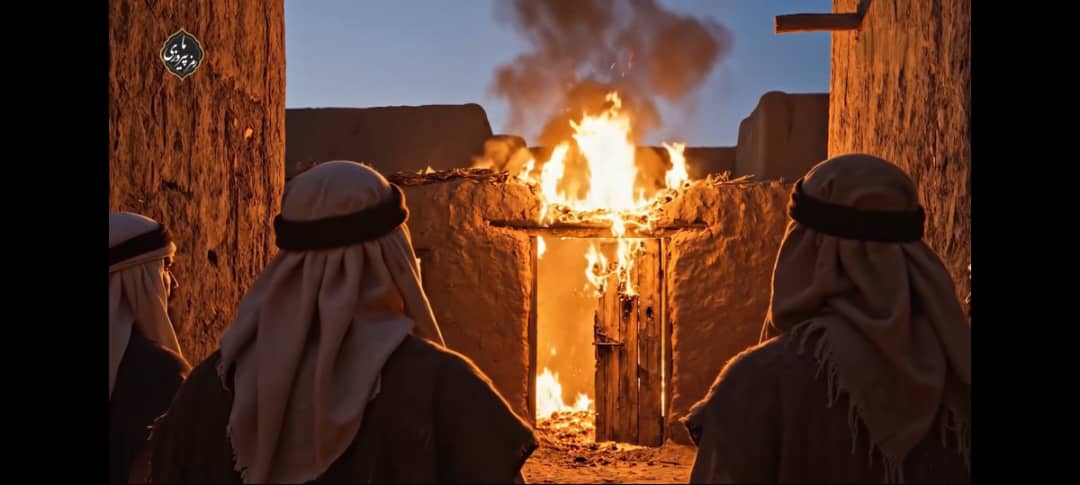
According to what is narrated in detail in Shia sources, the caliphal apparatus, after taking the pledge of allegiance from people in various ways, turned its attention to Imam Ali (AS) to take his pledge of allegiance by any means necessary. Umar and a few others were tasked by the caliph to go to the door of Imam Ali’s (AS) house and bring him – who considered the caliphate to be his right according to God’s decree and the Prophet’s (PBUH) announcement and refused to pledge allegiance to Abu Bakr – to the mosque for allegiance. They forcibly entered the house of Fatima (SA), struck her, and violently dragged Ali (AS) towards the mosque for allegiance.
Al-Fayd al-Kashani in Nawadir al-Akhbar narrates the quality of this event, quoting from Ihtab Niran al-Ahzan, as follows: “Umar gathered a group and came with them to the house of Amir al-Mu’minin (AS). They came to the back door, and it was locked, so they shouted, ‘O Ali, come out! The Caliph of the Messenger of God calls you.’
Setting fire to Zahra’s house
When the door was not opened for them, they brought firewood and piled it behind the door and brought fire to ignite it. At that moment, Umar shouted, ‘By God, if you do not open the door, I will burn it down.’ When Hazrat Zahra (AS) realized they were going to burn her house, she got up and opened the door. They pushed the door aside before she could cover herself from them. So Fatima hid behind the door. Then Umar pushed the door violently until she was crushed between the door and the wall.”
“Then they rushed towards Amir al-Mu’minin (AS) and united against him until they dragged him out of his house, having pulled his clothes over his head, and dragged him to the mosque. So Fatima interposed between them and her husband and said, ‘By God, I will not let you take my cousin unjustly to be killed. Woe unto you! How quickly you betrayed God and His Messenger regarding us, the Ahl al-Bayt, while the Messenger of God (PBUH) had called you to follow us, love us, and hold fast to us. And Allah Almighty said: «قُلْ لَا أَسْأَلُکُمْ عَلَیهِ أَجْرًا إِلَّا الْمَوَدَّةَ فِی الْقُرْبَی» (Say, ‘I do not ask you for any reward for it except love of [my] relatives.’)'”
The narrator says: “So most of that group left Ali (AS) because of Fatima (SA). So Umar ordered Qunfudh bin ‘Umar to whip him. So Qunfudh whipped him on his back and sides until he was weakened, and the marks of those whips remained on his noble body, and that beating was the strongest cause for the miscarriage of the fetus whom the Prophet (PBUH) had named Muhsin…”
Sunni sources
have generally avoided narrating this event in detail or have denied it. However, many of them have reported matters that indicate the violation of the sanctity of Hazrat Zahra’s house or the preparation to burn it down, though they have not elaborated on the event in detail. The following are examples of this:
- Ahmad bin Yahya al-Jabir al-Baghdadi al-Baladhuri (d. 270 AH) narrates this historical event in his book Ansab al-Ashraf: “Abu Bakr sent for Ali (AS) to pledge allegiance, but Ali refused. Then Umar set out with a fatilah (a kind of torch). He encountered Fatima at the door of the house. Fatima said, ‘O son of al-Khattab! Do I see you intending to burn down my house?!’ Umar said, ‘Yes! This act aids in that for which your father was sent!!'”
- Ibn Qutaybah al-Dinawari (212-276 AH) writes in his book Al-Imamah wa al-Siyasah: “Abu Bakr inquired about those who refused to pledge allegiance to him and had gathered in Ali’s house and sent Umar after them. He came to the door of Ali’s (AS) house and called everyone to come out, and they refused to leave the house. At that point, Umar asked for firewood and said, ‘By the God in whose hand is Umar’s soul, come out or I will burn the house down over your heads.’ A man said to Umar, ‘O Abu Hafs! In this house is Fatima, the daughter of the Prophet!’ He said, ‘So be it!!'”
Other sources that refer to this subject include:
- Tarikh al-Tabari, Muhammad bin Jarir al-Tabari, Beirut edition, Vol. 2, p. 443.
- Musannaf Ibn Abi Shaybah, Vol. 8, p. 572.
- Al-‘Iqd al-Farid, Ibn ‘Abd Rabbih, Halabi Press, Vol. 4, p. 93.
- Fara’id al-Simtayn, Ibrahim bin Muhammad al-Juwayni, Beirut print, Vol. 2, pp. 34-35.
Sunni sources that confirm
A number of Sunni sources have also reported statements that indicate the occurrence of this event or explicitly refer to parts of it. For example, this statement from Abu Bakr is found in several sources: Abu Bakr said on his deathbed: “There are three things I did that I wish I had not done… one of those three: I wish I had not violated the sanctity of Fatima’s house.”
Ibrahim bin al-Siyar al-Nazzam al-Mu’tazili (160-231 AH) says in his book Al-Wafi bi al-Wafayat: “Umar struck Fatima’s abdomen on the day of taking allegiance for Abu Bakr, causing her to miscarry the child she was carrying in her womb, whom they had named Muhsin.”
Al-Dhahabi, in his book Mizan al-I’tidal, in the biography of Ibn Abi Darim, writes: “Ahmad bin Muhammad, known as Ibn Abi Darim, a Kufan traditionist (d. 357 AH) – whom Muhammad bin Ahmad bin Hammad al-Kufi described as ‘Kana mustaqim al-amr ‘amrata dahrih‘ (He was upright in his affairs for most of his life) – narrates that this news was read in his presence: ‘Umar kicked Fatima, and she miscarried the child she had in her womb, named Muhsin.'”
The Visit of Abu Bakr and Umar to Hazrat Fatima Zahra:
According to narrations, Abu Bakr, accompanied by Umar bin al-Khattab, after the attack and while Hazrat Zahra was bedridden due to illness, came to visit her and greeted her, but she turned her face away and did not respond to them. Abu Bakr said: “O daughter of the Prophet! We have come to seek your satisfaction. We ask you to forgive us and pardon us for what has befallen you.” Zahra (SA) said: “First, you answer me: Did you hear from the Prophet that he said about me: ‘Fatima is a part of me, and I am from her. Whoever hurts her has hurt me, and whoever hurts me has hurt God. Whoever hurts her after my death is as if he has hurt me during my lifetime’?”
They said: “Yes, we heard it.” Thereupon, Fatima said: «اَللّهُمَّ اَشْهَدُهُمْ» “O God, be my witness against these two.” Then she said: “I will not speak with you until I meet my Lord and complain about you.”
The Martyrdom of Hazrat Fatima Zahra
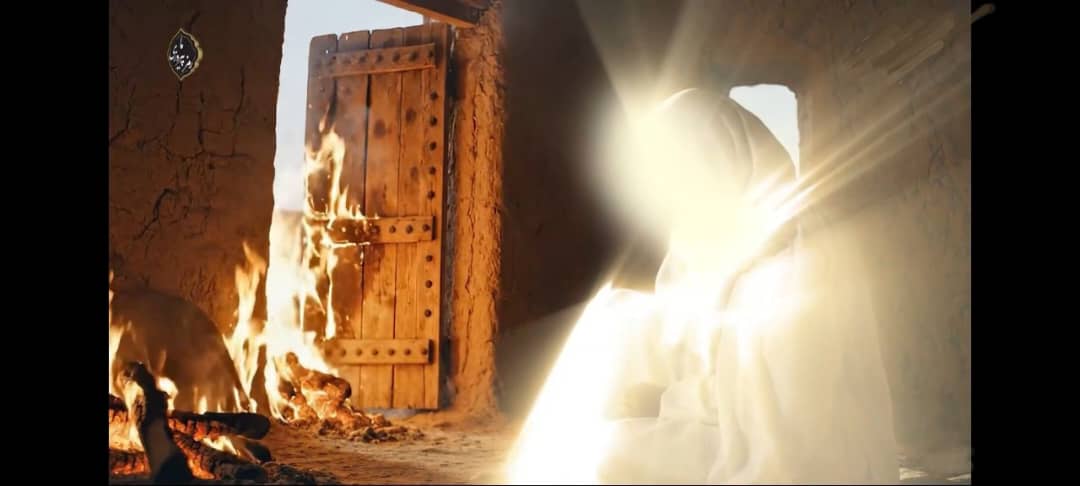
Hazrat Fatima Zahra(SA) was martyred a few days after the attack on her house due to the injuries she sustained. Regarding the date of her martyrdom, there are several opinions among historical books. Some historians mention this period as forty days, while others state it was six months after the Prophet’s (PBUH) passing. Also, in narrations from the Imams (AS), two dates are mentioned, and many Shia scholars consider the date of 95 days after the Prophet’s passing to be more reliable. According to this narration, her martyrdom occurred on the 3rd of Jumada al-Thani, 11 AH.
Verses Revealed Concerning Hazrat Fatima
The Verse of Mubahalah (3:61)
The event of Mubahalah occurred in the ninth or tenth year AH. When the Christians of Najran, out of stubbornness and obstinacy, did not accept the Prophet’s words about the oneness of the Creator and the status of Hazrat Isa (AS), the verse was revealed:
«فَمَنْ حَاجَّک فِیهِ مِنْ بَعْدِ مَا جَاءَک مِنَ الْعِلْمِ فَقُلْ تَعَالَوْا نَدْعُ أَبْنَاءَنَا وَأَبْنَاءَکمْ وَنِسَاءَنَا وَنِسَاءَکمْ وَأَنْفُسَنَا وَأَنْفُسَکمْ ثُمَّ نَبْتَهِلْ فَنَجْعَلْ لَعْنَتَ اللَّهِ عَلَى الْکاذِبِینَ» (آل عمران: ۶۱)
“So whoever argues with you about it after what has come to you of knowledge, say, ‘Come, let us call our sons and your sons, our women and your women, ourselves and yourselves, then supplicate earnestly and invoke the curse of Allah upon the liars.'”
At the appointed time, the Prophet (PBUH) brought with him Imam Hasan and Imam Husayn (AS), Hazrat Fatima (SA), and his son-in-law Hazrat Ali (AS).
Allamah Tabataba’i, regarding the Verse of Mubahalah, says: “The Messenger of God, in compliance with this command, brought for ‘our sons’ none other than al-Hasan and al-Husayn, for ‘our women’ none other than Fatima, and for ‘ourselves’ none other than Ali (AS). It becomes clear that for the first word, he found no referent other than Ali (AS), for the second no referent other than Fatima (SA), and for the third no referent other than al-Hasan and al-Husayn (AS). It is as if the intended meaning of ‘our sons,’ ‘our women,’ and ‘ourselves’ were the Ahl al-Bayt
In the annals of Islamic history, few figures shine with the profound and enduring light of Hazrat Fatima Zahra (SA). As the beloved daughter of the Final Prophet, Muhammad (PBUH), and the wife of the first Imam, Ali (AS), her life represents the sacred bridge between Prophethood and Imamate.
Yet, for all her esteemed titles—Az-Zahra, As-Siddiqah, Sayyidatun Nisa al-Alamin—her most pivotal role for humanity is as the mother of the Sadat. From her noble lineage, carried through her sons Al-Hasan and Al-Husayn (AS), flows the pure stream of the Ahl al-Bayt, blessing the world with generation upon generation of noble descendants. This article delves into her complete life, exploring how the Prophet’s daughter became a timeless beacon of faith, resistance, and the mother of the Sadat for all time.
This post is also available in:


